English
 English
 Español
A product developer sets a swatch on the table with a note attached: the 160 gsm polyester jersey on this running top feels clammy after twenty minutes, so can the style move to nylon? It is a fair question, and it appears in nearly every fabric review where a comfort complaint surfaces. The honest answer is that nylon alone will not fix it, and the reason is worth understanding before the next sampling round.
The short answer
At fibre level, nylon is marginally more breathable than polyester: roughly 10 to 15 percent on air permeability when both are tested in identical constructions. Nylon's moisture regain of about 4.0 to 4.5 percent lets it absorb more water vapour from the microclimate next to the skin, while polyester sits near 0.4 percent and stays almost fully hydrophobic. That advantage disappears the moment a denser knit, a heavier yarn or a light coating enters the picture.
Practical rule: if you need air to move, change the construction first and the fibre second.
Breathability is decided by four variables, and fibre chemistry is the smallest of them. Yarn form and denier, knit or weave structure, fabric weight, and the finishing route together account for most of the difference between a fabric that vents heat and one that traps it.
What Breathable Actually Measures in a Lab
Air permeability and moisture vapour transmission answer different questions, and confusing them is the source of most bad specifications. Air permeability, tested to ASTM D737 and reported in mm/s at 125 Pa, measures how much air passes straight through the fabric. Moisture vapour transmission, measured by ASTM E96 or expressed as an ISO 11092 Ret value, measures how quickly water vapour escapes. A windproof shell can be highly vapour-permeable and almost completely air-impermeable at the same time, which is why the two numbers rarely move together.
Yarn form and denier
Spun yarns trap more air between fibres than flat filament yarns. A 150D yarn builds a bulkier, more open fabric than a 40D yarn at the same pick count.
Knit or weave structure
Single jersey, mesh and warp knits leave open channels between yarns. Tight plain weaves, taffeta and ripstop close them. Cover factor shifts air permeability further than fibre choice ever does.
Weight and thickness
A 110 gsm mesh and a 220 gsm interlock can share the same yarn and still differ by several hundred mm/s.
Finishes and lamination
A DWR is a surface treatment and barely changes airflow. A PU coating or a TPU membrane can take air permeability from 300 mm/s down to almost nothing.
For scale, a 110 to 130 gsm polyester mesh typically measures 700 to 1,200 mm/s on ASTM D737. A 150 gsm single jersey lands near 200 to 400 mm/s. A 40D calendered nylon taffeta with a DWR finish sits around 5 to 40 mm/s, and a three-layer waterproof laminate is effectively at zero even when its vapour transmission is excellent.
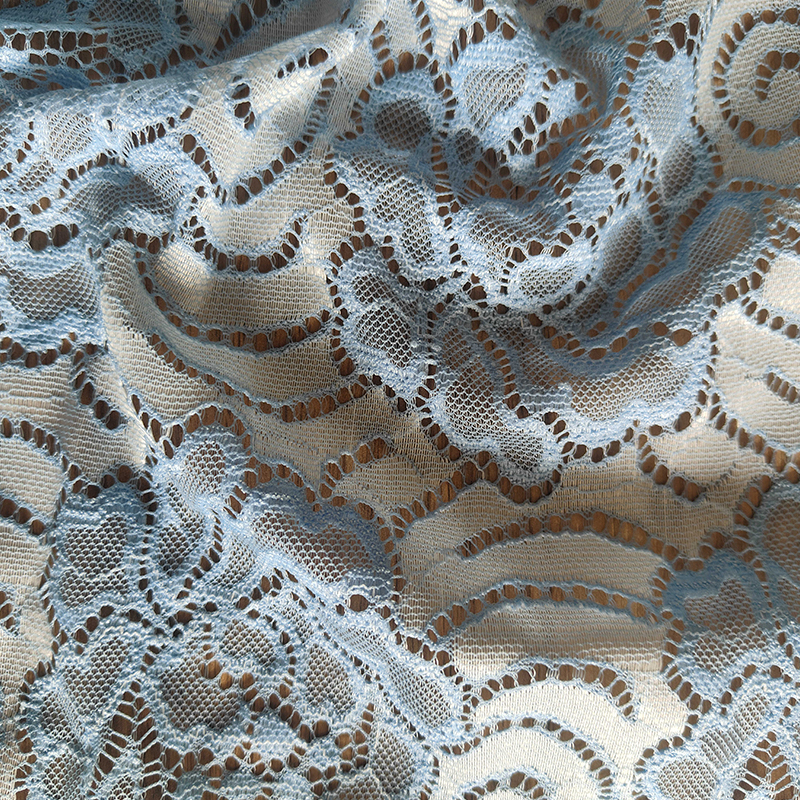 Mesh Running Wear Sports and Leisure FabricsA breathable mesh fabric series for running sportswear, linings and outdoor uses, with varied weights, compositions and finishing options.View Product →
If your program sits on the waterproof-breathable side of that range, the mechanics of coatings, membranes and DWR chemistry are covered in our note on what makes waterproof breathable sports fabrics work, which is worth reading before a laminate is written into a style sheet.
Nylon vs Polyester: A Fibre-Level Comparison
Strip away the marketing language and the two polymers differ in a handful of measurable ways that buyers can verify in a test report.
Typical ranges for standard textile-grade fibre tested in comparable knitted constructions at 125 Pa. Confirm every figure on your own approved sample before bulk.
Property
Nylon (polyamide 6 and 6.6)
Polyester (PET)
Moisture regain at 65% relative humidity
4.0-4.5%
0.4%
Dry tenacity
5.0-8.0 g/den
4.0-7.0 g/den
Strength retained when wet
80-90%
Close to 100%
Abrasion resistance
Excellent
Good
UV stability outdoors
Poor; yellows and embrittles
Good, especially with a UV stabiliser
Drying speed, identical construction
Moderate
Fast, roughly 20-30% quicker
Air permeability, identical 150 gsm knit
300-380 mm/s
310-400 mm/s
Hand feel
Softer, slightly cooler
Crisper, drier
Typical end uses
Stretch knits, outer shells, linings, hosiery
Activewear, mesh, taffeta, wadding, sleepwear
The numbers support a narrow conclusion. Nylon wins on abrasion resistance, wet strength and hand feel. Polyester wins on drying speed, UV stability and cost per metre. On air permeability the two sit close enough that a construction change will always outweigh a fibre change, so a comfort complaint should never be answered with polymer substitution alone.
Where the Real Gap Appears: Air Permeability by Construction
The chart below compares published ASTM D737 ranges across five common constructions. The spread inside a single fibre family is far wider than the spread between nylon and polyester.
8 mm/s
40D nylon taffeta, calendered
25 mm/s
70D polyester ripstop, DWR
260 mm/s
190 gsm nylon and spandex warp knit
340 mm/s
150 gsm polyester single jersey
900 mm/s
110 gsm polyester mesh
Two jerseys of the same weight, one nylon and one polyester, usually land within 10 to 15 percent of each other. Move from a jersey to a mesh and the value jumps by a factor of three or more. That is the whole argument in one comparison: structure sets the ceiling, fibre decides the fine detail.
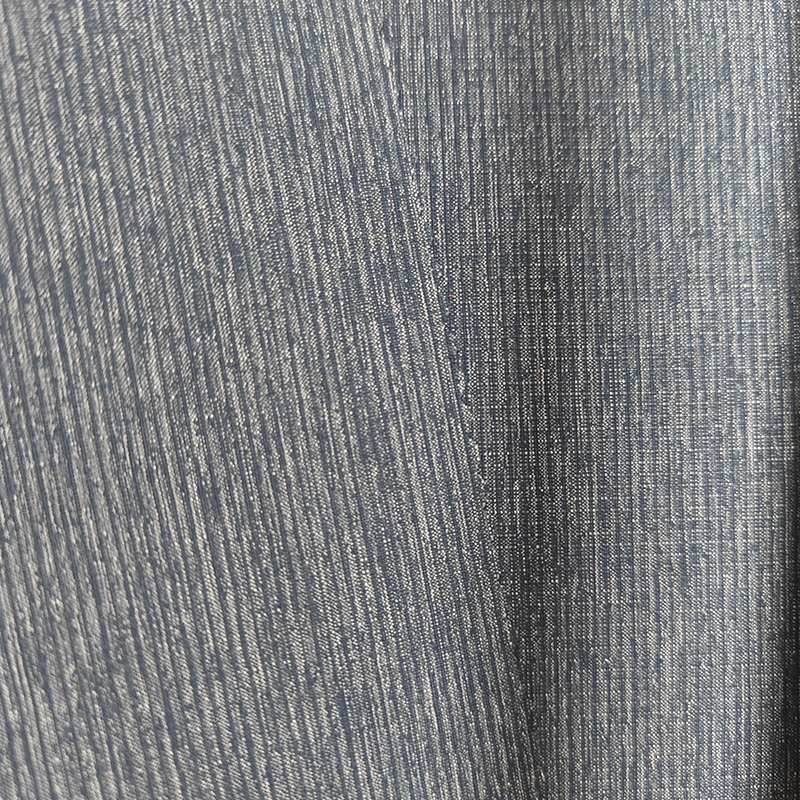 Nylon Four-Way Stretch Outdoor Fabric SeriesA nylon-based stretch fabric series for outdoor, active and protective apparel, offering many weights, nylon/spandex blends and finishing options.View Product →
The metric most spec sheets leave out is Ret, the evaporative resistance measured under ISO 11092. Lower is better: a running jersey sits around 3 to 5 m2Pa/W, a light windbreaker around 8 to 12, and a coated shell pushes past 20, where the body struggles to shed heat. Ret captures fabric, air layer and fit together, which is why a 90 gsm nylon mesh and a 90 gsm polyester mesh can post nearly identical Ret values despite different chemistry. Nylon's higher regain gives a slightly drier hand feel during short bursts of activity; polyester's faster drying keeps the surface drier across an hour of sustained sweating. Neither effect is large enough to justify changing an entire program on its own.
Where Breathable Synthetics Are Actually Used
Sportswear and activewear - 36%
Outdoor apparel and gear - 24%
Menswear and womenswear - 18%
Home textiles and sleepwear - 14%
Bags and packaging - 8%
Sportswear and activewear take the largest share, because mesh, jersey and four-way stretch knits sit at the centre of that market and breathability is a purchase driver rather than a bonus. Outdoor apparel and gear follow, where the trade-off between wind resistance and vapour escape is most visible in a spec sheet. Menswear and womenswear come next, mostly in stretch wovens and shirt-weight knits where drape and recovery matter as much as airflow. Home textiles and sleepwear favour softer, brushed and terry constructions. Bags and packaging form the smallest slice, because abrasion resistance and dimensional stability outrank breathability there.
The same construction logic runs through our fabric catalogue, where nylon and polyester four-way stretch, mesh, jersey and terry are grouped by end use rather than by polymer, so a buyer can compare like with like.
A Practical Selection Sequence
Step 1: Set the comfort target
Airflow-driven sports such as running and cycling want Ret under 6. Wind protection wants air permeability under 50 mm/s. General apparel lands in between. Write the number down before looking at fibres.
Step 2: Choose the construction
Mesh or single jersey for maximum airflow. Interlock, terry and fleece for warmth with some breathability. Taffeta and ripstop when wind resistance outranks ventilation.
Step 3: Then pick the polymer
Nylon for toughness, abrasion resistance and a softer hand. Polyester for fast drying, UV stability and better value in high-volume programs.
Step 4: Confirm the finishing route
A DWR preserves airflow. A PU coating or laminated membrane does not. Decide which one the design genuinely requires before quoting.
Step 5: Test to standards, not adjectives
Request ASTM D737 air permeability, ASTM E96 or ISO 11092 Ret, and AATCC 195 liquid moisture management on the exact construction you intend to buy.
Step 6: Fix the tolerance before bulk
Air permeability shifts with relaxation, dyeing and finishing. A plus-or-minus 10 percent window against the approved sample is a realistic starting point.
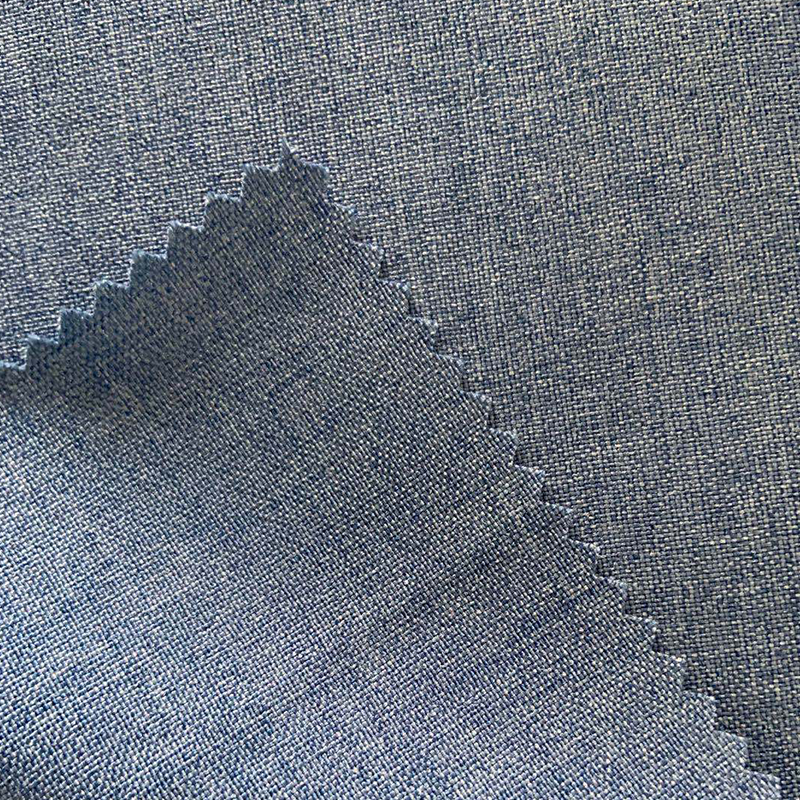 Polyester Four-Way Stretch Sports and Leisure FabricA polyester stretch fabric series for activewear, rainwear and casual styles, balancing quick-dry comfort, waterproof-breathable options and post-processing versatility.View Product →
Care, Testing and Compliance Notes
A fabric that tests well in the lab can still fail in the wash. These are the points that come up most often once a breathable synthetic program moves into production and retail.
- Fabric softener is the fastest way to destroy a wicking finish, because it coats the fibre surface and blocks the capillary channels that move liquid water.
- Washing at 30 to 40 degrees Celsius with a mild detergent protects both the DWR and the yarn's elasticity. Tumble drying on low can reactivate a DWR; high heat will damage spandex and dull the finish.
- Repeated washing gradually strips surface finishes and increases microfibre shedding, so a wash bag recommendation for the consumer is now standard in European program briefs.
- Keep compliance paperwork attached to the breathability claim: OEKO-TEX STANDARD 100 for chemical safety, bluesign for restricted substances, GRS for recycled polyester content, and REACH SVHC declarations for EU shipments. For the US market, fibre content rules under 16 CFR Part 303 and care labelling under 16 CFR Part 423 apply to the finished garment.
- PFC-free DWR chemistry is now the default request from most European brands and typically carries a cost premium that should be quoted separately from the base fabric price.
The next time a swatch comes back with a comfort complaint, start with the construction numbers rather than the fibre name. Ask what the air permeability was on the approved sample, what the Ret value looks like, and whether a heavier yarn or a coating crept in between approval and bulk. In most cases the fix is a more open knit or a lighter yarn rather than a switch from polyester to nylon, and if that switch is genuinely needed, a mill can usually tell you within a few hundred mm/s what it will and will not change.