English
 English
 Español

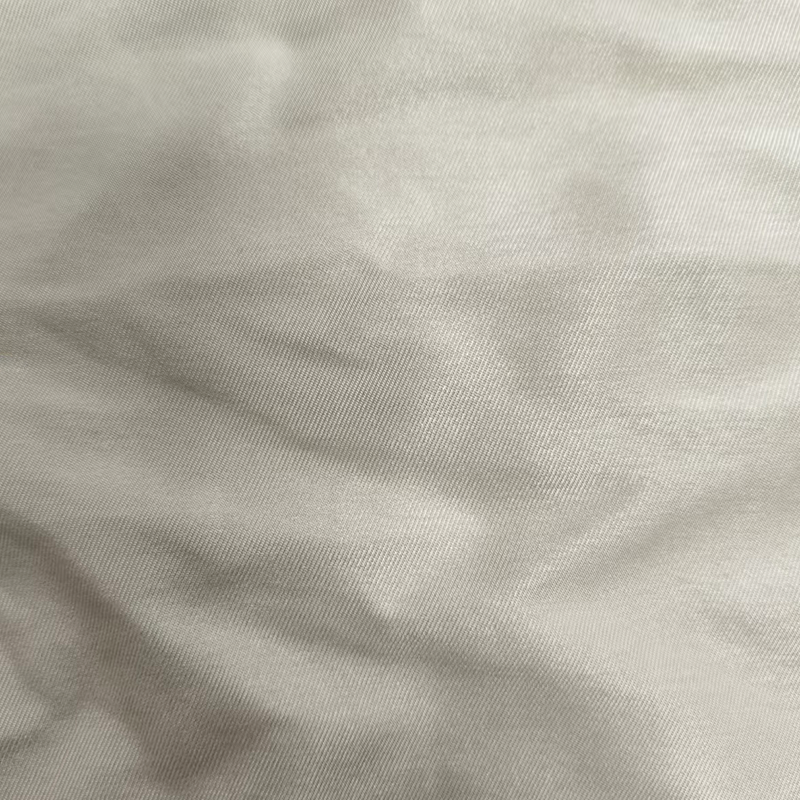
Picture a 45-minute interval class in a warm gym: the shirt starts dry, turns soaked within fifteen minutes and then clings to your shoulders through the cool-down. Fabric that survives that cycle has to move moisture, hold its shape and resist the abrasion of repeated washing and stretching. Nylon is one of the few fibers that can do all three at a workable cost.
So is nylon good for working out? Yes. In leggings, base layers, training tops and light outer shells, nylon beats cotton on almost every performance metric and matches or outperforms standard polyester on strength and abrasion resistance. What the word "nylon" on a care label does not tell you is whether the fabric was engineered for the gym or simply knitted from the cheapest yarn available.
The rest of this article is written for people who specify fabric rather than just wear it: product developers, sourcing managers and brand teams deciding what goes into a training collection, and what will still look acceptable after thirty wash cycles.
The Short Answer, Before the Detail
Three variables decide whether a nylon fabric performs in the gym or disappoints. Get them right and nylon is an excellent choice. Get them wrong and the same fiber feels hot, heavy and clammy.
Yes, when these three conditions are met
- Knit structure creates capillary channels. A 140 to 180 gsm interlock, pique or mesh moves sweat away from skin; a dense 260 gsm double knit for leggings keeps opacity without trapping heat.
- Blend ratio is controlled. 80/20 or 88/12 nylon and spandex gives four-way stretch with real recovery; 100 percent nylon filament is the better answer for woven shells and packs.
- Finishing supports wicking instead of blocking it. A silicone-heavy, softener-loaded hand feel can seal the surface and turn a technical knit into a plastic bag.
Colour, prints, branding and packaging are all downstream of those three decisions.
Why Nylon Works: Fiber Mechanics Without the Chemistry Lesson
Moisture: slower than polyester, far faster than cotton
Nylon 6.6 has a moisture regain of roughly 4.0 to 4.5 percent, polyester about 0.4 percent and cotton 7 to 8.5 percent. That places nylon in the middle. It absorbs a small amount of water into the fiber itself, which reduces the wet-cling sensation on skin, and releases it quickly when the knit has fine capillary channels between yarns. In practice, a 150 gsm nylon interlock dries in roughly half the time of a comparable cotton jersey and feels less clammy than polyester in humid conditions. If you are comparing constructions for a specific end use, this breakdown of how waterproof-breathable sports fabrics work is a useful companion read.
Abrasion: the strongest argument for nylon
Abrasion resistance is where nylon separates itself. A 220 gsm nylon and spandex interlock commonly survives 30,000 to 50,000 Martindale cycles before a hole appears, while a lightweight cotton jersey may fail below 15,000. For leggings that rub against a saddle, a weight bench or a spin-bike seat, that gap is the difference between one season and three.
Stretch and recovery
Nylon filament is more flexible than polyester at the same denier, so a nylon and spandex blend snaps back into shape faster after stretching. With 18 to 22 percent spandex and a controlled heat-setting step, 80/20 blends typically recover above 95 percent after 30 percent elongation. That is the reason good training tights stay opaque and stay in place through squats and lunges.
Where nylon is genuinely weaker
Two honest limitations. First, UV: nylon degrades faster than polyester under prolonged sunlight and can yellow, so for high-altitude or desert programmes a polyester face fabric or a UV-stabilised nylon is usually the safer specification. Second, cost and pilling: nylon filament costs more than standard polyester, and short-staple nylon blends can pill at friction points such as underarm seams and inner thighs.
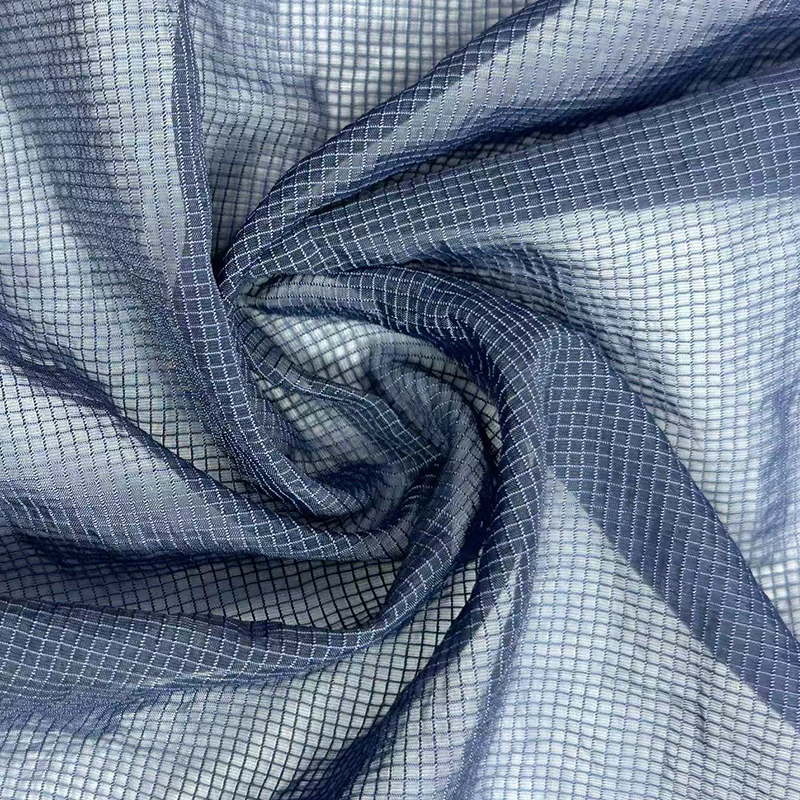
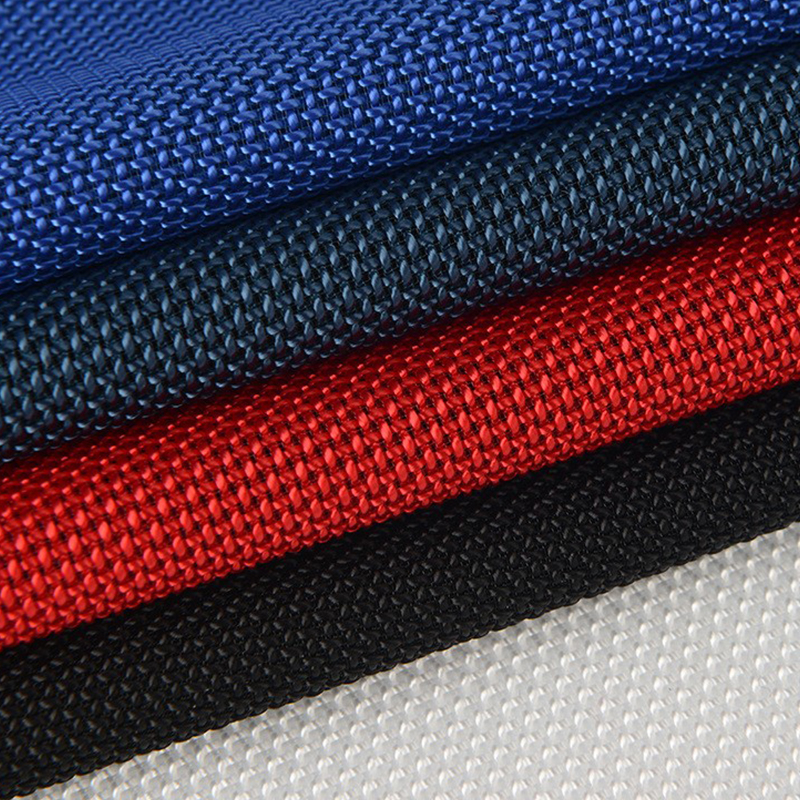
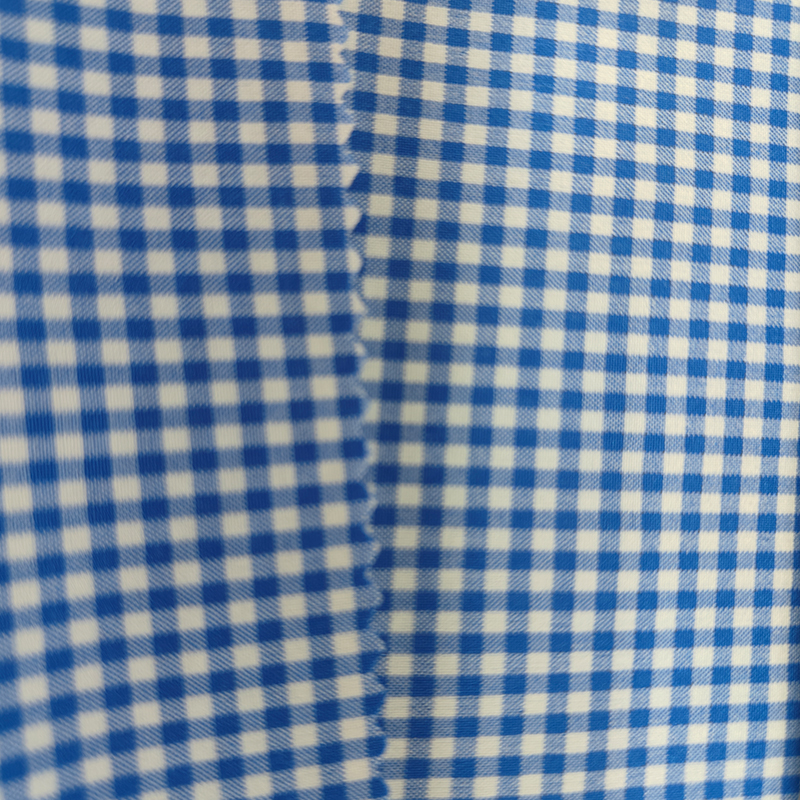 Nylon Four-Way Stretch Sports and Leisure FabricPremium nylon and nylon/spandex knits with four-way stretch, abrasion resistance, quick-drying comfort, and options for sportswear, jackets, workwear, and outdoor gear.View Product →
Nylon, Polyester and Cotton: A Direct Comparison
The table below compares typical values for common training-fabric fibers. Moisture regain figures are standard fibre properties; abrasion and cost figures are relative indicators used in fabric development rather than guarantees.
Indicative comparison of typical apparel fibers. Actual performance depends on yarn count, knit structure, GSM and finishing, so always confirm with your own lab tests before signing off a bulk order.
The Hidden Metrics Most Buyers Never Check
Two fabrics can both be labelled "nylon spandex" and still differ by a factor of three in service life. The chart below shows typical Martindale abrasion results in thousands of cycles for common training constructions tested to ASTM D4966. Buyers who ask for this number early avoid most quality claims later.
50k
Nylon 6.6 interlock
42k
Nylon spandex 80/20
30k
Polyester interlock
14k
Cotton jersey
Three further numbers are worth putting in a spec sheet: liquid moisture management (AATCC 195), colourfastness to perspiration and washing (ISO 105), and pilling resistance after five wash cycles. Together they predict whether a garment still looks sellable after a real training season.
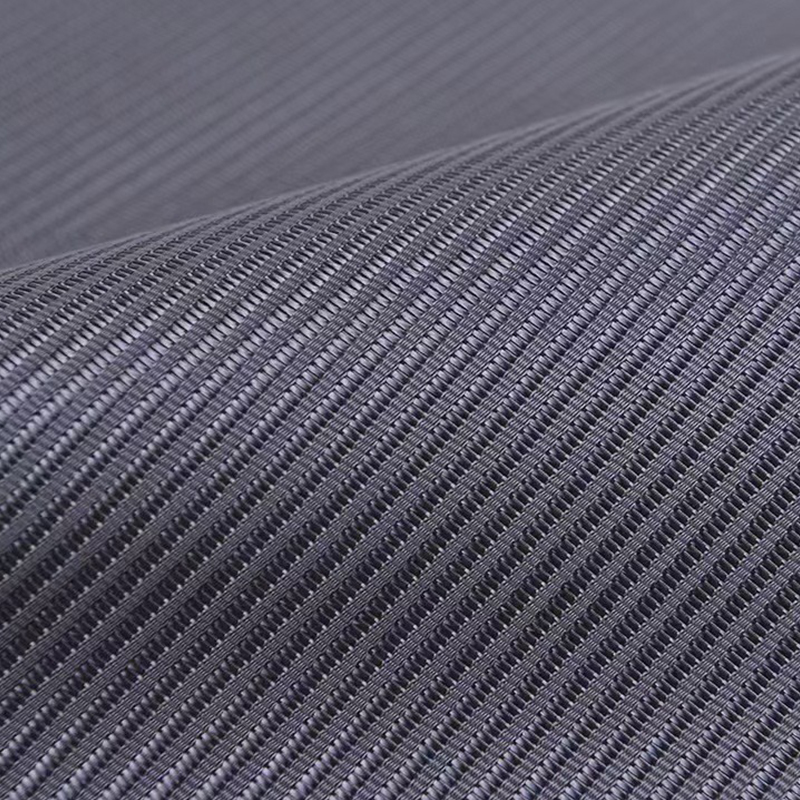
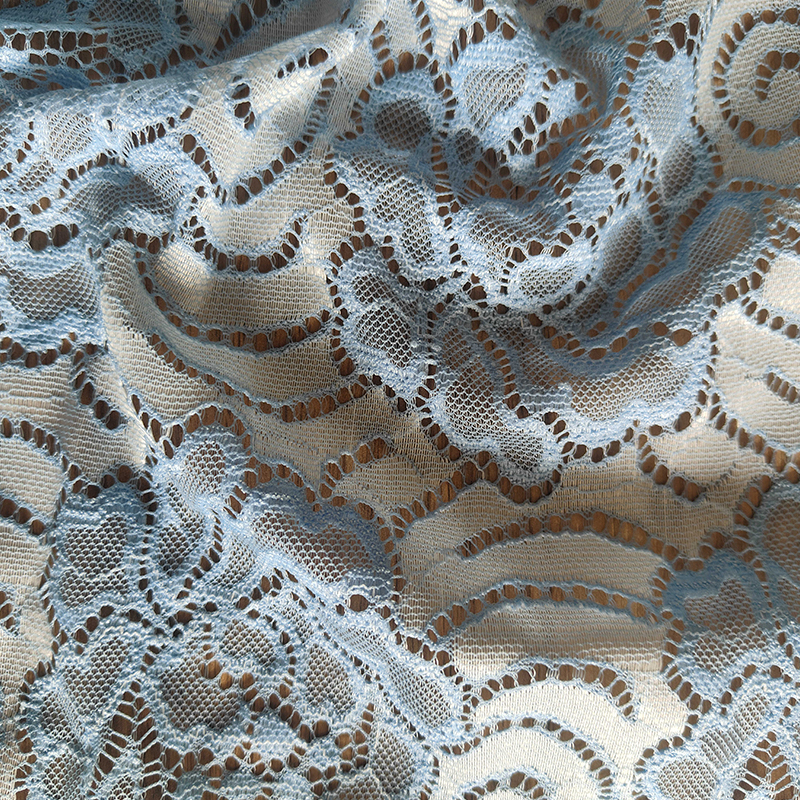 Breathable Mesh Fabric for Running and SportswearPorous mesh series with polyester, nylon, and spandex blends, offering moisture-wicking breathability, lightweight stretch, and durability for sportswear, linings, shoe uppers, and outdoor textiles.View Product →
Where Nylon Sits in the Activewear Market
Nylon is not used evenly across a training wardrobe. Its share skews towards garments that need strength, stretch and a soft hand at the same time, which is why leggings and base layers consume far more of it than loose tops.
Base layers and compression: 30%
Training tops and tees: 24%
Leggings and tights: 22%
Light shells and windbreakers: 14%
Socks, straps and accessories: 10%
If your programme is leggings-heavy, nylon is usually the default. If it is a loose, low-cost promotional tee, a polyester or polyester-cotton blend will often hit the target price with acceptable performance.
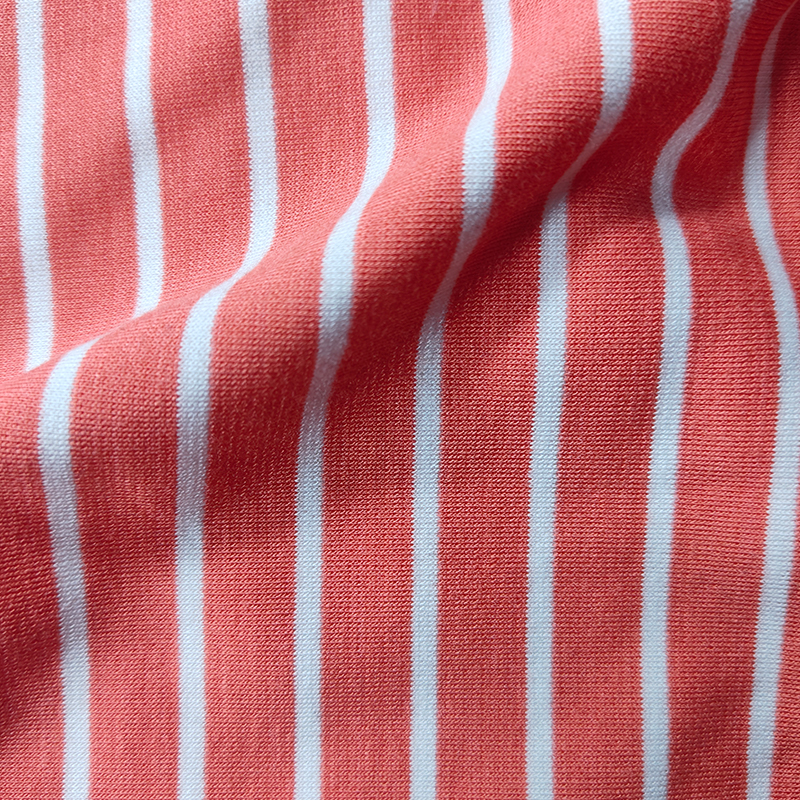 Knitted Jersey Fabric for Yoga Wear and SportswearSoft weft-knitted jersey with breathability, moisture absorption, elasticity, and printability, suited to yoga wear, leggings, T-shirts, polos, and children’s clothing.View Product →
A Sourcing Workflow That Prevents Expensive Mistakes
Most nylon failures are specification failures, not fiber failures. Working through these six steps in order keeps development time and sampling costs under control.
- Define the use case. Yoga, running, lifting and court sports load fabric differently. Name the activity, the climate and the expected number of wears per week before touching yarn counts.
- Fix the fiber and blend. Nylon 6.6 for abrasion-critical pieces, nylon 6 where cost matters more, recycled nylon where a sustainability claim must be documented.
- Choose the knit structure and GSM. 140 to 180 gsm interlock or mesh for tops, 220 to 260 gsm with spandex for leggings, and a woven construction for shells.
- Specify dyeing and finishing. Wicking, anti-odour, UV protection or a brushed back are separate processes with separate costs and separate test methods.
- Test before bulk. Abrasion, wicking, colourfastness, shrinkage and stretch recovery on a finished sample, not on greige fabric.
- Lock the specification. Record yarn, GSM, tolerance, finish and test results in a signed tech pack so repeat orders match the first one.
Care, Durability and Compliance Notes
Nylon's biggest enemies in the wash are heat, chlorine and fabric softener. Softener coats the fiber surface and blocks the capillary action that makes the knit work, while chlorine bleach attacks polyamide and causes yellowing. A care label advising a 30 to 40 degree wash, no bleach, no softener and a low tumble dry will keep wicking performance intact for far longer than the label most brands currently print.
On compliance, three documents carry most of the weight for activewear nylon: OEKO-TEX STANDARD 100 for restricted substances, the Global Recycled Standard where recycled polyamide is claimed, and ISO 3758 care labelling symbols for the final garment. Where a brand makes environmental claims, the supporting traceability file should travel with the fabric, not be reconstructed after the order ships.
None of this is exotic. It is the difference between buying nylon by the metre and buying nylon by the performance specification, and it is the reason a 15 percent higher fabric price often produces a 50 percent longer product life.
As a functional knit fabric manufacturer working with nylon, polyester and their blends for sport, outdoor and homewear programmes, we see the same pattern in every development season: the projects that specify structure, ratio and finish from the start are the ones that ship on time and generate the fewest claims.