English
 English
 Español
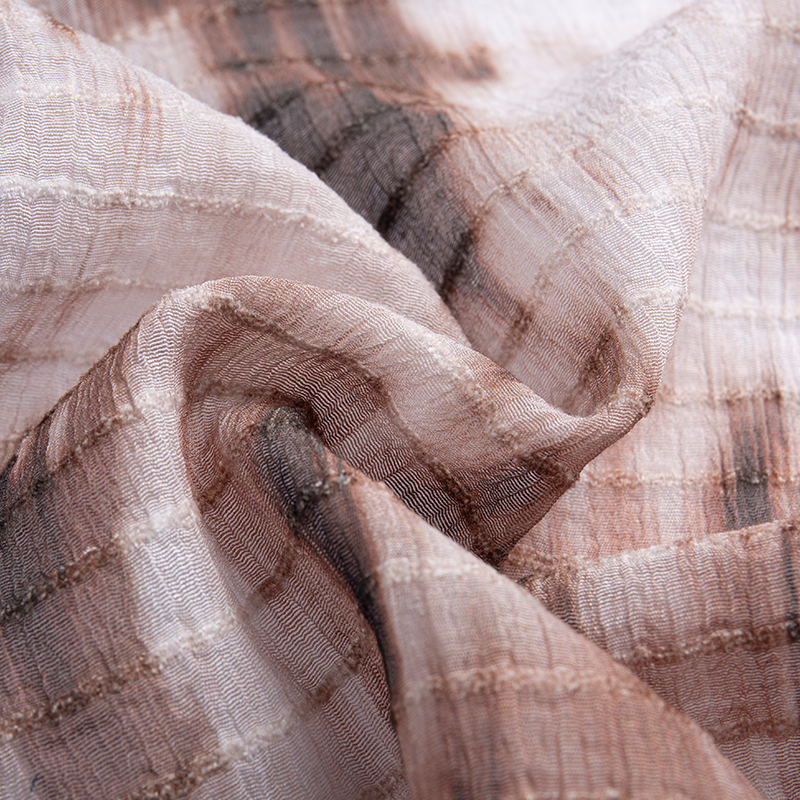

T400 and T8 Series Fabrics Eliminate Spandex While Delivering Superior Gym Wear Performance
The T400 and T8 series represent a fundamental shift in gym wear and sports fabric engineering. By using bicomponent composite elastic fibers—T400 from PET-PTT and T8 from PBT-PET—these textiles achieve durable stretch and recovery without a single gram of spandex. This spandex-free architecture solves the four chronic failures that plague traditional elastane blends: chlorine degradation, UV-induced aging, heat damage during drying, and permanent elastic fatigue after repeated wear cycles. For athletes, brands, and manufacturers, the result is activewear that maintains its shape through hundreds of washes, resists the chemical and thermal stresses of daily training, and offers a softer, more natural hand feel than conventional polyester-spandex constructions.

How Bicomponent Composite Fibers Generate Mechanical Stretch
Both T400 and T8 fibers are produced through composite spinning, a process that extrudes two distinct polymers through a single spinneret to create a side-by-side or eccentric sheath-core cross-section. When exposed to heat during dyeing and finishing, the two polymers shrink at different rates. This differential shrinkage forces the fiber into a permanent three-dimensional spiral crimp, which acts as a mechanical spring. T400 uses PTT (polytrimethylene terephthalate) paired with PET, while T8 uses PBT (polybutylene terephthalate) paired with PET. The resulting curl structure delivers elasticity 2 to 5 times greater than standard polyester filaments, yet the fiber itself contains no elastane polymer.
This mechanical stretch mechanism is the critical difference. Spandex relies on segmented polyurethane chains that stretch and relax through molecular deformation. Over time, these chains break down under oxidation, heat, and chemical exposure. The spiral crimp in T400 and T8, by contrast, is a physical structure set during manufacturing. It does not fatigue at the molecular level, which is why elastic recovery remains above 95% even after 500 stretching cycles and maintains superior shape retention through years of use.
The Structural Difference Between T400 and T8
While both fibers share the same bicomponent principle, their polymer pairings create measurable distinctions in processing and performance. T400's PTT component gives it a slightly higher shrinkage rate—approximately 10% greater than T8 under identical heat treatment conditions. This translates to more pronounced crimp and marginally higher stretch potential. T8's PBT component, meanwhile, offers a first melting point around 228°C compared to T400's approximately 220°C, giving T8 a slight edge in thermal stability during high-temperature finishing. In practical gym wear applications, both fibers perform similarly; the choice often comes down to raw material cost and supply availability, with PBT historically priced lower than PTT.
| Property | T400 (PTT/PET) | T8 / T800 (PBT/PET) |
|---|---|---|
| Polymer Pairing | PTT + PET | PBT + PET |
| First Melting Point | ~220°C | ~228°C |
| Shrinkage Rate | Higher (~10% more than T8) | Moderate |
| Elastic Recovery (500 cycles) | >95% | >95% |
| Stretch vs. Standard PET | 2–5× greater | 2–5× greater |
| Typical Denier Range | 50D–300D | 30D–300D |
| Spandex Content | 0% | 0% |
Why Spandex-Free Elasticity Outlasts Traditional Blends in Gym Environments
Gym wear faces a unique combination of stressors: repeated high-intensity stretching, exposure to sweat and skin oils, frequent washing in municipal water containing residual chlorine, and drying at varying temperatures. Spandex blends begin to degrade under these conditions within months. T400 and T8 fabrics, by eliminating spandex entirely, remove the weakest link from the material chain.
Four Critical Spandex Failures That T400 and T8 Solve
- Chlorine degradation: Residual chlorine in tap water and pool environments breaks down elastane polymer chains. T400 and T8 contain zero polyurethane, so chlorine has no target to attack.
- UV and oxidation aging: Sunlight and atmospheric oxygen degrade spandex over time, causing yellowing and loss of recovery. The all-polyester composition of T400 and T8 resists UV damage far more effectively.
- Heat sensitivity: Spandex permanently sets into a stretched or shrunken state when exposed to dryer heat above 60°C. T400 and T8 tolerate standard drying temperatures without compromising their mechanical crimp.
- Elastic fatigue: Every stretch cycle deforms spandex molecular chains microscopically. After enough cycles, yoga pants and compression tops simply stop snapping back. T800 testing shows less than 3% permanent deformation after 50,000 stretch cycles, a threshold no spandex blend can approach.
In real-world terms, a pair of gym leggings made from polyester-spandex will typically show knee bagging and waistband looseness after 20 to 30 washes. An equivalent garment constructed with T400 or T8 maintains its original fit and compression profile for the functional lifetime of the fabric. For commercial gym wear brands, this translates directly into lower return rates and stronger customer retention.
Moisture Management and Comfort in High-Output Training
Beyond elasticity, gym wear must manage moisture effectively to prevent chafing, odor buildup, and thermal discomfort during intense sessions. T400 fibers feature a grooved hollow cross-section that channels sweat away from the skin and disperses it across the fabric surface for rapid evaporation. T800 polyester fabric dries eight times faster than cotton and twice as fast as standard polyester, making it exceptionally suited for high-output training where fabric saturation is a genuine performance limiter.
The hand feel is another decisive advantage. Regular polyester can feel slick, cold, or synthetic against the skin—an immediate turnoff for consumers expecting comfort. T400 and T8 fibers are engineered with a fully matte finish and fiber geometry that mimics the softness of cotton. The result is a fabric that delivers the durability and quick-dry performance of synthetic fibers while providing the natural, plush tactile experience wearers associate with premium casualwear. This dual benefit is particularly valuable in the athleisure segment, where garments must transition seamlessly from the gym to everyday wear.
Manufacturing and Cost Efficiency for Activewear Brands
From a production standpoint, T400 and T8 offer significant workflow advantages over spandex-core yarns. Spandex must be covered or core-spun before weaving, adding a processing step that increases cost and introduces quality variability. T400 and T8 can be directly woven on air-jet, water-jet, and rapier looms without pre-covering, streamlining the supply chain and improving batch consistency. This direct-weave capability reduces yarn handling damage and eliminates the tension-control complexities that spandex introduces into knitting and weaving operations.
On cost, T800 greige fabric typically runs ¥4 to ¥5 per meter less than T400, positioning it as a value-conscious choice for brands seeking mechanical stretch without the premium associated with PTT-based fibers. Compared to nylon alternatives, both T400 and T8 cost roughly half the price while offering comparable strength and superior moisture management. For a production run of 10,000 meters, selecting T800 over T400 yields savings of approximately $5,000 to $6,000—substantial for mid-scale activewear labels managing tight margins.
Dyeing and Color Performance
T400 and T8 fabrics dye uniformly across the entire polyester composition, avoiding the color variation known as "barre" that plagues spandex blends where elastane refuses dye uptake. T400 supports dyeing temperatures from 100°C to 130°C, achieving dual-tone effects at 120°C and even solid shades at 130°C with colorfastness ratings of 4 or higher on standard scales. Because the fibers are 100% polyester, they also resist the yellowing that afflicts aging spandex, ensuring that white and light-colored gym wear stays crisp through repeated laundering.
Sustainability and End-of-Life Advantages
The textile industry faces mounting pressure to address microplastic pollution and improve circularity. Spandex blends are notoriously difficult to recycle because separating elastane from polyester is economically unviable, and the mixed composition disqualifies them from standard polyester recycling streams. T400 and T8, being 100% polyester-based mono-materials, are fully compatible with existing mechanical and chemical recycling infrastructure. A garment made from T400 or T8 can be shredded, melted, and re-extruded into new fiber without the contamination issues that spandex introduces.
Additionally, the extended lifespan of spandex-free gym wear reduces overall consumption. A T400 compression top that maintains its performance for three years replaces two or three equivalent spandex garments that fail within twelve to eighteen months. For brands publishing sustainability reports, the shift to mechanical stretch fibers provides measurable reductions in product replacement rates and post-consumer textile waste. Some T400 variants also incorporate bio-based PTT polymerized from PDO (1,3-propanediol), offering a partial renewable content pathway for brands targeting advanced eco-certifications.
Practical Applications Across Gym Wear Categories
The versatility of T400 and T8 extends across the full spectrum of gym and sports apparel. In compression wear, the fibers provide consistent, graduated pressure without the degradation that causes spandex-based compression garments to lose their therapeutic fit. In yoga and Pilates apparel, the soft hand feel and four-way stretch support deep range-of-motion poses while maintaining opacity. For high-intensity interval training and CrossFit-style workouts, the abrasion resistance and moisture-wicking performance keep athletes dry and protected during floor work and barbell contact.
The T8 series has also found strong adoption in seersucker and textured sportswear fabrics, where its stretch properties combine with dobby weaves to create breathable, anti-static surfaces ideal for summer training. T400 remains the preferred choice for denim-inspired activewear and outerwear shells where higher shrinkage and more aggressive crimp deliver greater stretch amplitude. Both fibers are increasingly specified for home textile applications—stretch sofa covers, fitted sheets, and adaptive bedding—where spandex aging has historically been a primary failure mode.
Conclusion: The Future of Gym Wear Is Spandex-Free
T400 and T8 series fabrics have moved from niche alternatives to mainstream solutions in performance textile design. By replacing spandex with engineered bicomponent mechanical stretch, they deliver gym wear that lasts longer, performs better, and aligns with the sustainability expectations of modern consumers. The elimination of elastane removes the primary failure mode in activewear elasticity while improving dye consistency, thermal tolerance, and recyclability. For manufacturers, the direct-weave capability reduces processing complexity and cost. For athletes, the result is apparel that maintains its compression, shape, and comfort through every rep, every wash, and every season. The transition to spandex-free elasticity is not a compromise—it is an upgrade in every measurable dimension.