English
 English
 Español
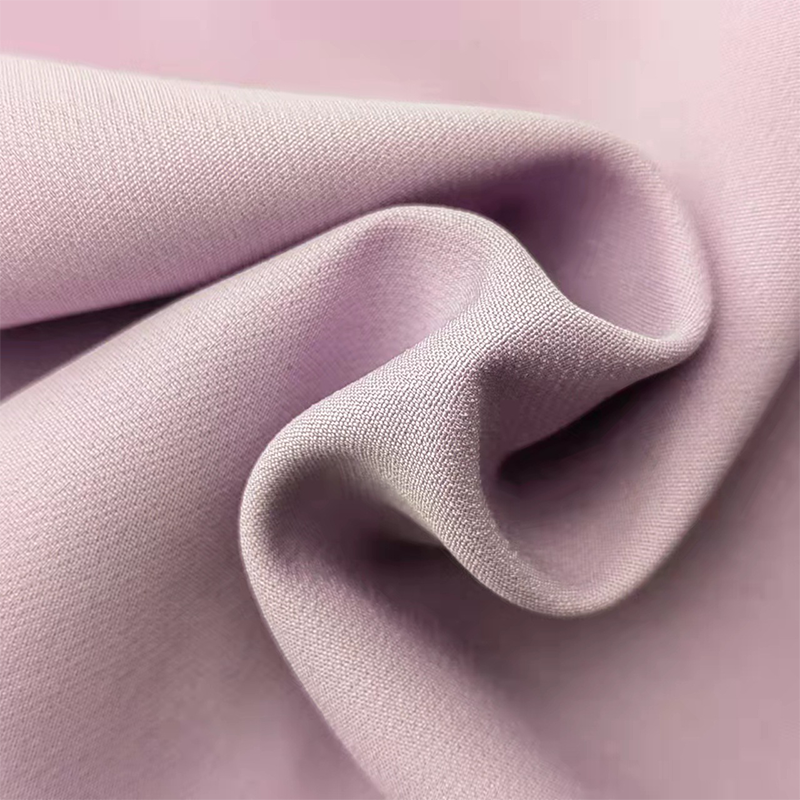
Chenille Is Defined by Its Yarn Structure, Not Its Fiber Content
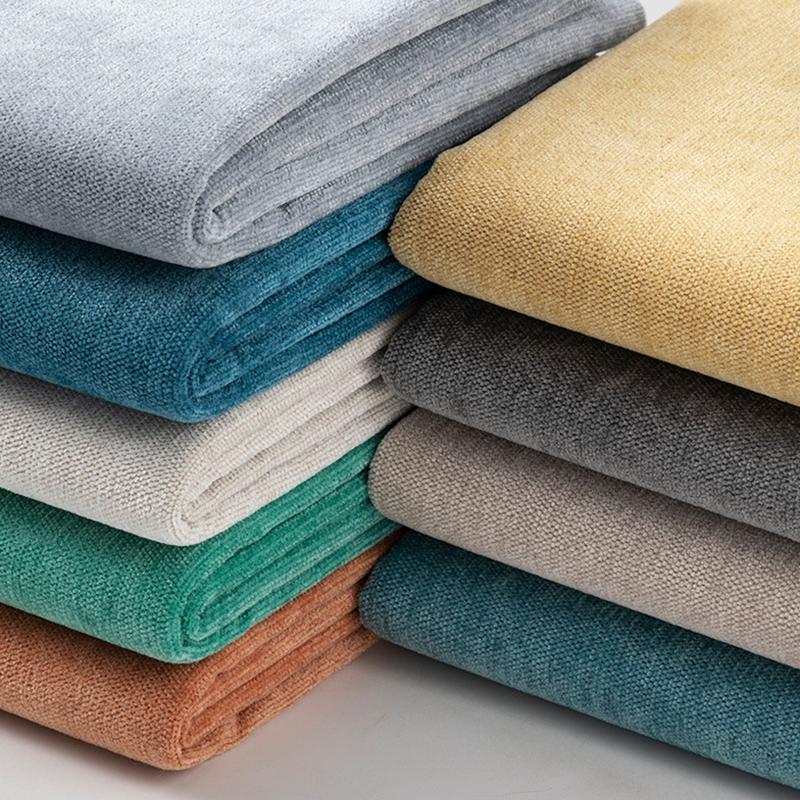
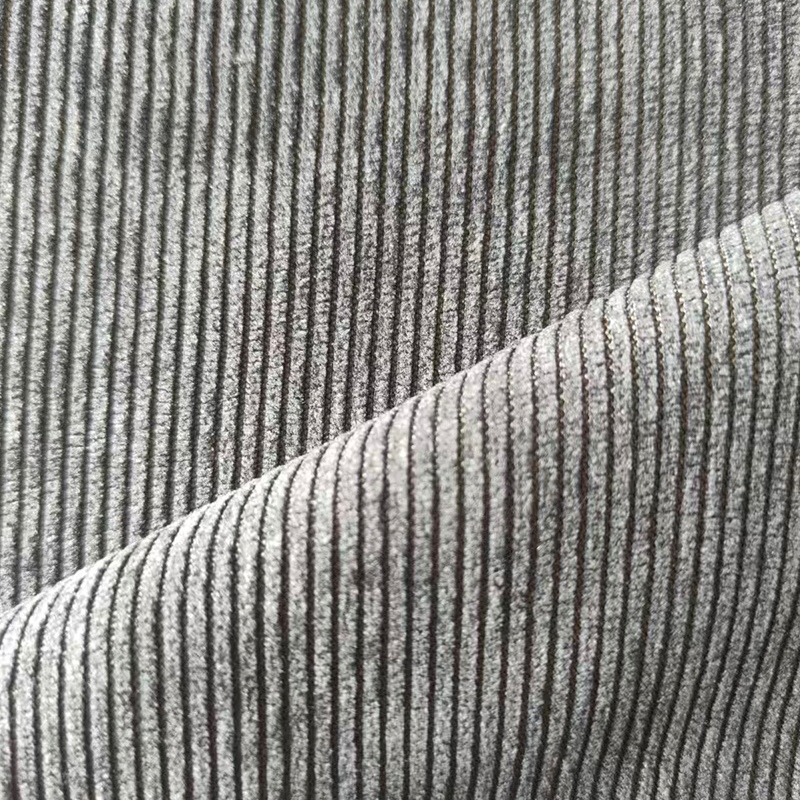
Chenille home textiles fabrics achieve their characteristic soft, fuzzy, caterpillar-like surface through a yarn construction method entirely different from conventional spun or filament yarns. A chenille yarn consists of short fiber tufts, called pile, trapped between two core yarns that are twisted together to lock the tufts in place radially. When woven or knitted into fabric, these tufts stand perpendicular to the fabric plane, creating a dense, plush surface with a velvety hand feel and a distinctive directional light reflection that changes depending on which way the pile is brushed. The name chenille comes from the French word for caterpillar, and under magnification, the yarn structure reveals exactly why: the trapped fiber tufts resemble the bristled body of a caterpillar, with each tuft extending outward from the central core axis. This yarn-level pile construction is what separates chenille from velvet, which achieves its pile through a woven warp pile structure that is cut after weaving, and from flocked fabrics, where short fibers are electrostatically adhered to a coated substrate. In chenille, the pile is an integral part of the yarn before weaving begins, which creates different durability characteristics, different failure modes, and different design possibilities.
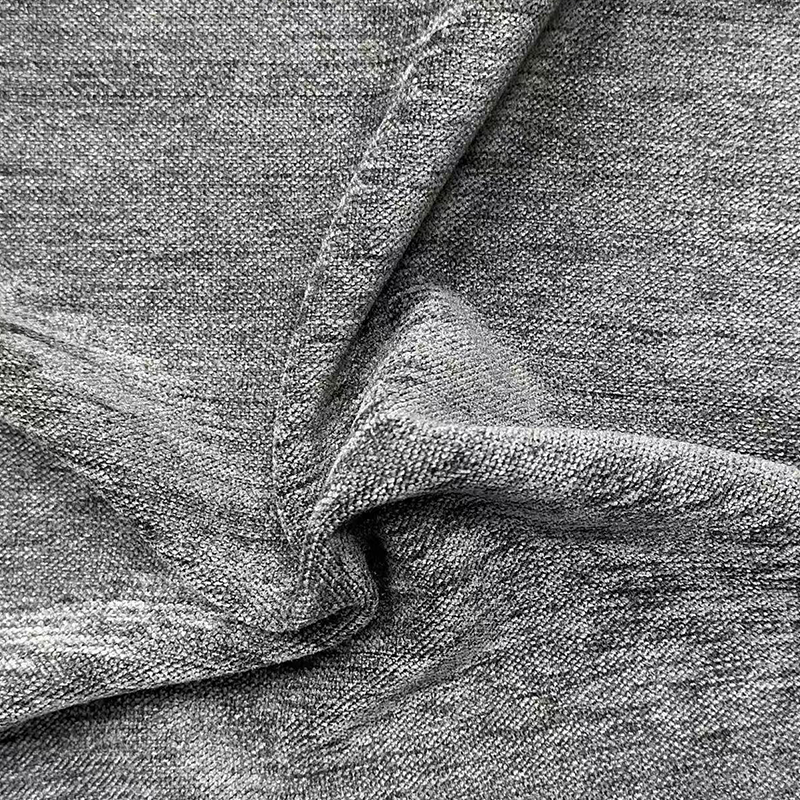
The Pile Locking Mechanism and Why Cheap Chenille Sheds
The durability of a chenille home textiles fabric is determined at the yarn manufacturing stage by how securely the pile tufts are anchored between the core yarns. In a properly constructed chenille yarn, two plies of core yarn—typically cotton, polyester, or nylon—are twisted together at a rate of 8 to 12 twists per inch with the pile fibers inserted continuously between them. The twist traps each tuft at its midpoint, leaving both ends free to form the soft surface. If the twist level is too low, the core yarns do not grip the pile tufts with sufficient compressive force, and the tufts pull out during use and washing—the familiar shedding problem that ruins inexpensive chenille throws and upholstery. If the twist is too high, the pile tufts are compressed and cannot bloom to their full loft, resulting in a flat, less tactile fabric. The optimal twist balances grip and bloom, and quality manufacturers verify this balance with a tuft withdrawal force test that measures the force in grams required to pull a single pile tuft from the yarn—typically 20 to 40 grams for upholstery-grade chenille. The core yarn fiber also matters: nylon core yarns provide higher twist retention than polyester, and polyester cores outperform cotton cores in humid environments where cotton cores can swell and relax their grip on the pile.
Fiber Selection and the Performance Profile It Creates
The fiber used for the pile tufts defines the tactile character, durability, and cleanability of the finished chenille home textiles fabric. Cotton chenille produces the softest initial hand feel and is highly absorbent, making it ideal for bathrobes and towels where water absorption is a functional requirement, but cotton pile tufts have lower abrasion resistance than synthetics and will mat down in high-wear upholstery applications within 18 to 24 months. Polyester chenille offers excellent colorfastness, good abrasion resistance, and inherent stain resistance due to polyester's low moisture absorption, but it lacks the natural coolness of cotton against the skin. Acrylic chenille mimics wool's loft and warmth at a lower cost, making it common in decorative throw blankets, but acrylic pile is susceptible to heat-setting deformation—a hot mug placed on an acrylic chenille placemat can leave a permanent flattened impression where the pile tufts have thermally relaxed into a compressed state. Olefin chenille, solution-dyed polypropylene, delivers exceptional stain and fade resistance combined with high abrasion ratings above 40,000 Martindale cycles, making it the preferred choice for commercial upholstery and high-traffic home textiles such as family room sofas and dining chair seat pads.
| Pile Fiber | Hand Feel | Abrasion Resistance | Stain Resistance | Best Application |
|---|---|---|---|---|
| Cotton | Excellent, naturally cool | Moderate | Low, absorbs stains | Throws, bath textiles, low-wear upholstery |
| Polyester | Good, can feel synthetic | Good to Very Good | Good, low absorbency | General upholstery, cushions, curtains |
| Acrylic | Warm, wool-like | Moderate | Moderate, susceptible to heat damage | Decorative throws, accent pillows |
| Olefin (Polypropylene) | Fair to Good | Excellent | Excellent, solution-dyed | Heavy-use upholstery, pet-friendly furniture |
The Weaving and Knitting Methods That Produce Chenille Fabric
Chenille yarn can be incorporated into fabric through weaving or knitting, and the method chosen fundamentally affects the fabric's drape, stretch, and pile density. Woven chenille is typically constructed as a plain weave or twill weave with the chenille yarn running in the weft direction, meaning the pile-rich yarn sits horizontally in the fabric and creates a surface where the pile tufts are oriented along the length of the fabric roll. The warp yarns, which run vertically and are not chenille, provide the tensile strength and dimensional stability that the soft chenille weft cannot deliver alone. This is why woven chenille upholstery fabric resists stretching along its length but may show some give across its width. Knitted chenille, produced on circular or flat knitting machines, creates a more flexible, drapable fabric with stretch in both directions, making it the preferred construction for chenille throws, blankets, and garments. The knitted structure, however, has lower pile density than a tightly beaten woven construction, and knitted chenille is more prone to snagging and pile pull-out because the knitted loop structure provides less mechanical locking of the chenille yarn than the intersecting warp and weft of a woven structure.
Pile Orientation and the Shading Effect
Chenille home textiles fabrics exhibit a pronounced shading effect—the pile tufts lean in one direction, and the fabric appears lighter when viewed with the pile leaning toward the viewer and darker when viewed against the pile lean. This is not a defect; it is an inherent characteristic of the directional pile structure. In upholstery applications, the shading effect must be managed during cutting and sewing so that all fabric panels on a piece of furniture have the pile running in the same direction. If one seat cushion is cut with the pile up and another with the pile down, the two cushions will appear to be different shades even though the fabric is identical. The convention is to cut all panels with the pile running from top to bottom on vertical surfaces and from back to front on horizontal surfaces, so that the user viewing the furniture sees the lighter, pile-with-lean orientation.
Wear Patterns and the Crushed Pile Problem
Chenille home textiles fabrics used in upholstery develop specific wear patterns that are predictable based on the pile fiber and the usage conditions. The most common issue is pile crushing, where the tufts in high-contact areas—the seat cushion center, the armrest cap, the backrest lumbar zone—are compressed repeatedly until they lose their loft and the underlying ground weave becomes visible. This is a mechanical compression of the pile tufts, not an abrasion that wears them away. Cotton chenille crushes most readily and recovers least, because cotton fibers have poor elastic recovery—once bent, they stay bent. Polyester and olefin chenille offer superior crush recovery due to the inherent resilience of the synthetic fibers. Crushed pile can be partially restored by brushing with a stiff upholstery brush or a pet grooming slicker brush, working against the pile direction to lift the compressed tufts. Steam applied during brushing accelerates recovery by relaxing the fiber's internal stresses, but the steam must be applied to the brush or to the air above the fabric, never directly to the chenille surface, where moisture can wick into the core yarns and cause them to swell and relax their grip on the pile tufts, worsening shedding.
Cleaning Chenille and the Water Damage Warning
The cleaning of chenille home textiles fabrics requires an understanding of what happens when the pile tufts and core yarns get wet. Cotton-core chenille presents the greatest risk: when the cotton core yarns absorb water, they swell, and this swelling can relax the twist that locks the pile tufts in place, leading to tuft shedding during and after cleaning. This is the mechanism behind the disappointing experience of washing a chenille throw and finding a layer of loose fibers in the dryer lint trap while the throw itself appears thinner. The safest cleaning method for chenille home textiles is dry cleaning with petroleum-based solvents, which clean without swelling the core yarns. For water-washable chenille labeled as such by the manufacturer, the washing protocol should use cold water, a gentle cycle with low agitation, and air drying flat—never machine drying with heat, which causes differential shrinkage between the pile fibers and core yarns that can permanently distort the fabric surface. Spot cleaning with water-based upholstery cleaners should be approached with caution: apply the cleaner to a cloth, not directly to the fabric, and blot rather than rub to minimize pile disturbance and moisture penetration to the core yarns.
Pile Density and How to Assess It Before Buying
The pile density of chenille home textiles fabrics—the number of pile tufts per square inch—is the single best predictor of how the fabric will wear over time and how luxurious it will feel. Density is determined by the chenille yarn count, the weave density in picks per inch, and the pile height. A high-density chenille for upholstery will have a chenille yarn count of 2 to 4 Nm and be woven at 30 to 50 picks per inch with a pile height of 2 to 3 millimeters. At this density, the ground weave is completely obscured by pile tufts, and the fabric feels uniformly plush. A low-density chenille woven at 15 to 20 picks per inch with a thinner chenille yarn will show visible gaps between tuft rows, especially when the pile is brushed against the lean direction, and these gaps will widen as the tufts compress with use. The visual assessment for density is to part the pile with your fingers and look for the ground weave—in a quality chenille, the ground weave is difficult or impossible to see without forcefully spreading the tufts. In an economy chenille, the ground weave is visible with light finger pressure, indicating that there are simply fewer tufts to carry the wear load.
Distinguishing Real Chenille from Faux Chenille in the Market
The popularity of chenille home textiles fabrics has led to the emergence of faux chenille—fabrics that mimic the chenille look and feel without using true chenille yarns. The most common faux chenille is a flocked fabric where short fibers are electrostatically adhered to an adhesive-coated fabric substrate, creating a fuzzy surface that resembles chenille to the untrained hand. Flocked faux chenille is identifiable by its uniform, unnaturally even pile height and the absence of the slight directional irregularity that characterizes true chenille. Another imitation is brushed twill, where a heavy twill-woven fabric is mechanically brushed to raise a surface nap. The definitive test for chenille authenticity is the pile examination: part the pile and look for the individual tuft insertion points. In true chenille, each tuft emerges from between two twisted core yarns and both ends are free. In faux chenille, the fibers are attached at one end to the adhesive-coated substrate, and there are no core yarns visible within the pile structure. A burn test of the pile tufts also distinguishes synthetic faux chenille from natural-fiber true chenille, but the structural examination is non-destructive and definitive.
Application-Specific Specifications for Home Textile Categories
Different home textile applications place different demands on chenille fabric, and the specifications that make an excellent throw blanket are not the same as those that make a durable upholstered sofa. Chenille throws and blankets prioritize drape, softness, and washability; a knitted cotton or cotton-blend chenille at 250 to 350 GSM with a pile height under 2 millimeters provides the right balance of warmth, weight, and cleaning convenience. Chenille upholstery for sofas and chairs requires minimum 30,000 Martindale cycles abrasion resistance, a core yarn of polyester or nylon for twist retention, and pile fiber of polyester or olefin for crush recovery and stain resistance. Chenille curtains and drapery prioritize drape and light control over abrasion resistance; a woven chenille with rayon pile provides the desired weight and light-filtering properties without the durability requirements of upholstery. Chenille cushion covers and accent pillows sit between the two, requiring moderate abrasion resistance of 15,000 to 25,000 Martindale cycles and prioritizing colorfastness because decorative pillows often sit in direct sunlight. Selecting the appropriate chenille specification for each application prevents the disappointment of a fabric that is technically chenille but functionally inadequate for the use it receives.