English
 English
 Español

What Makes a Bag Fabric Worth Choosing
Not all bag fabrics are created equal. The material that covers your bag determines how long it lasts, how it handles daily wear, and whether it suits your lifestyle or business needs. Whether you're sourcing fabrics for luggage production, evaluating backpack materials, or simply trying to understand what separates a durable bag from a disposable one, the answer almost always starts with the fabric itself.
Bag fabrics today serve four core functions: protection, durability, convenience, and aesthetics. A well-chosen fabric shields bag contents from water, stains, and physical impact. It resists deformation under load and withstands years of repeated use. It stays lightweight and easy to clean. And it delivers the texture, color, and finish that make a bag worth carrying. These functions are not mutually exclusive—the best fabrics balance all four simultaneously, achieved through smart material selection and processing techniques.
The three dominant categories in today's market are polyester and nylon bag fabrics and imitation leather bag fabrics, each with distinct performance profiles and ideal use cases. Understanding how they differ helps manufacturers, designers, and buyers make informed sourcing decisions.
Polyester and Nylon Bag Fabrics: Performance Across Every Denier
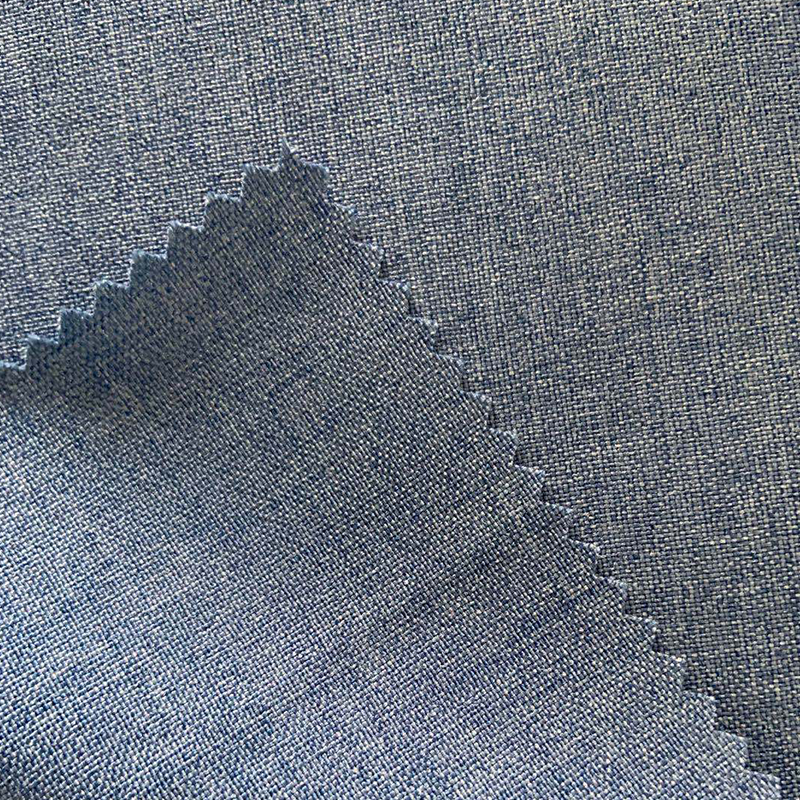
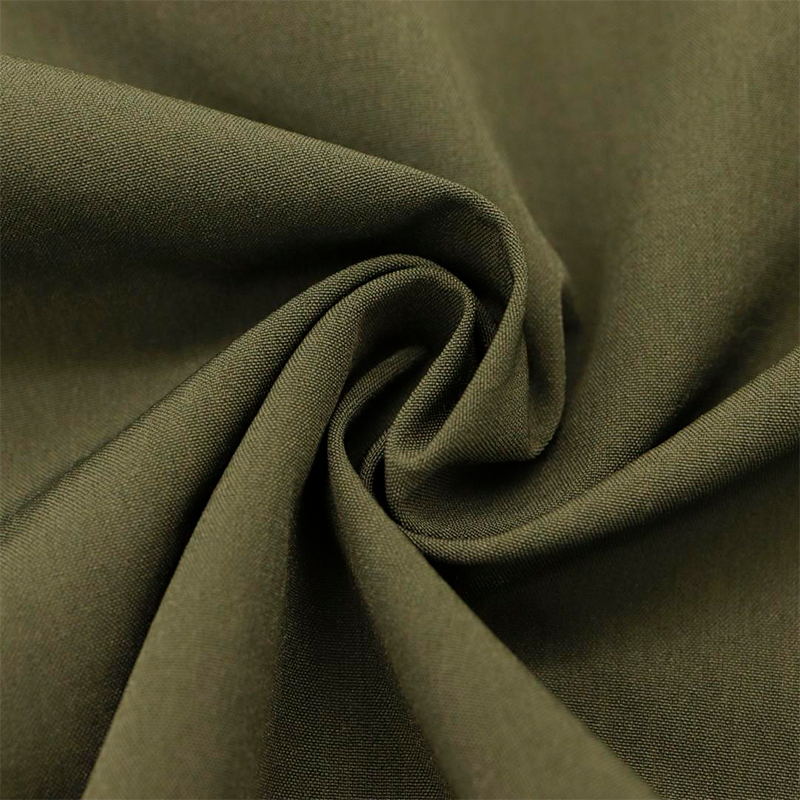
Polyester and nylon are the most widely used synthetic fibers in bag manufacturing, and for good reason. Both materials offer a rare combination of mechanical strength, weather resistance, and design flexibility that few alternatives can match at scale.
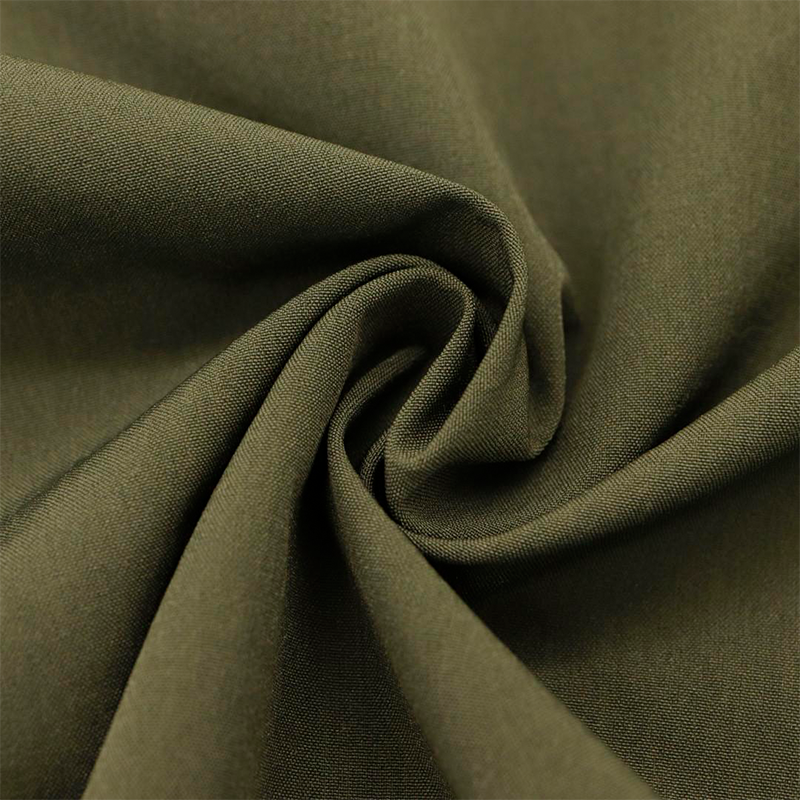
Polyester and nylon bags fabrics are available across a full CPSIA-compliant denier range, from lightweight options like 210D ripstop nylon used in compact travel pouches to heavy-duty 1680D ballistic nylon found in professional-grade luggage and tactical gear. Denier—the unit measuring fiber thickness—directly correlates with weight, abrasion resistance, and price point, giving designers precise control over the performance-to-weight ratio.
Key Performance Advantages
- Exceptional abrasion and tear resistance, capable of withstanding frequent use and external impacts without surface breakdown
- Good waterproof and stain resistance as a baseline, with further enhancement available through Teflon coatings, PU coatings, or DWR (durable water repellent) treatments
- High colorfastness that maintains vibrant, long-lasting colors through UV exposure and repeated washing cycles
- Lightweight construction that reduces total bag weight, critical for travel and outdoor use
- Broad process compatibility, including printing, lamination, PVC embossing, flame retardancy treatments, and heat sealing
In terms of applications, polyester and nylon bag fabrics cover a remarkably wide range: luggage shells, backpacks, briefcases, outdoor hiking bags, laptop bags, gym duffels, and more. Their relatively low production cost compared to natural fibers or premium synthetics makes them the default choice for manufacturers seeking an optimal balance between practicality and economy.
Nylon, while slightly more expensive than polyester, offers superior tensile strength and a softer hand feel—making it preferred for premium travel accessories and high-end backpacks. Polyester, by contrast, delivers better UV resistance and holds color more consistently over time, making it the go-to material for bags with bold prints or extended outdoor exposure.
Imitation Leather Bag Fabrics: Aesthetic Versatility Meets Functional Performance
Imitation leather bag fabrics have moved well beyond their early reputation as a budget substitute for genuine leather. Today's PU leather, PVC leather, and silicone leather each represent a sophisticated material category with targeted performance characteristics, capable of serving everything from fast-fashion handbags to high-end corporate briefcases.
PU, PVC, and Silicone Leather: How They Compare
| Material | Feel & Texture | Durability | Eco Profile | Best For |
|---|---|---|---|---|
| PU Leather | Soft, close to genuine leather | Good, may crack over time | Moderate | Handbags, fashion bags, briefcases |
| PVC Leather | Firm, structured finish | High abrasion resistance | Lower | Suitcases, budget bags, structured totes |
| Silicone Leather | Smooth, premium hand feel | Excellent, high elasticity | High (solvent-free production) | Premium bags, sustainable product lines |
All three variants share core advantages over natural leather: waterproof and stain-resistant surfaces that are easy to wipe clean, consistent textures free from the natural variation (and occasional defects) found in animal hides, and significantly lower cost. Imitation leather can also be embossed, printed, or finished in virtually any color, enabling designers to replicate the appearance of crocodile skin, pebbled grain, smooth nappa, or suede without sourcing actual exotic materials.
Silicone leather in particular has gained traction in sustainability-conscious markets. Produced without organic solvents, it carries a cleaner environmental profile than conventional PU or PVC, making it an increasingly viable choice for brands positioning themselves as green and responsible.
Matching Bag Fabric to Application: A Practical Guide
The right bag fabric is ultimately determined by the end-use scenario. A material that excels in one context may underperform in another. Below is a practical framework for aligning fabric choice with application requirements.
Business and Commute Bags
For briefcases, laptop bags, and professional backpacks, the priority is a polished appearance combined with structural integrity. PU imitation leather and mid-to-high denier nylon (600D–900D) are the dominant choices here. PU leather provides the refined, executive look expected in business settings, while coated nylon offers lightweight durability for daily commuters who value function alongside aesthetics.
Outdoor and Adventure Bags
Hiking packs, trekking daypacks, and expedition bags demand fabrics that perform under physical stress and changing weather conditions. High-denier nylon with ripstop weave construction—typically 420D to 1000D—is the standard for this category. Its tear-resistant structure contains damage when punctured, preventing small nicks from spreading. Combined with waterproof coatings or lamination, these fabrics maintain interior dryness even during heavy rainfall.
Fashion and Lifestyle Bags
Handbags, crossbody bags, and fashion totes prioritize visual variety and tactile appeal. Imitation leather bag fabrics dominate this segment, offering the widest range of textures, colors, and surface treatments. PU and PVC leathers allow for high-volume, cost-effective production of trend-driven designs, while silicone leather appeals to the growing segment of consumers seeking sustainable materials without sacrificing style.
Luggage and Travel Bags
Large-format bags—suitcases, duffel bags, and travel backpacks—face the harshest handling conditions: conveyor belts, overhead bins, cargo holds. PVC leather provides the structural firmness and scuff resistance needed for hard-sided luggage panels, while high-denier polyester (1680D–1800D) remains the workhorse for soft-sided luggage due to its weight-to-strength ratio and resistance to tensile deformation.
Processing Techniques That Expand Fabric Potential
Raw fabric performance is only the starting point. The finishing and processing techniques applied to both polyester and nylon bag fabrics and imitation leather bag fabrics dramatically expand what each material can do.
- Teflon and DWR coatings add water-repellent surface properties to polyester and nylon, causing water to bead and roll off rather than soak through the weave.
- PU and PVC coatings applied to woven fabrics create a sealed surface layer that blocks moisture penetration entirely, upgrading water resistance from repellent to waterproof.
- Flame retardant treatments are essential for bags used in regulated environments—public transport, aviation, and institutional settings—where fire safety standards apply.
- PVC embossing presses surface patterns onto imitation leather, creating textures that mimic natural grain, geometric designs, or branded motifs at high volumes.
- Lamination bonds a film layer to fabric, adding stiffness, a glossy or matte finish, or additional moisture barriers without significantly increasing weight.
- Heat sealing fuses fabric edges or seams without stitching, eliminating the needle holes that can become entry points for moisture—critical in waterproof bag construction.
These processes are not exclusive to one material type. A polyester base fabric can receive PVC embossing to take on the visual qualities of imitation leather, while a PU leather surface can be laminated for additional rigidity. This cross-application of techniques is what allows manufacturers to achieve precise performance and aesthetic outcomes from a relatively small base material palette.
Ultimately, the diversity of bag fabric options—spanning bag fabric types from lightweight ripstop weaves to structured PVC panels—reflects the diversity of the bags themselves. Understanding both the material properties and the processing possibilities allows designers and buyers to specify exactly what they need, and to make sourcing decisions grounded in performance evidence rather than assumption.