English
 English
 Español
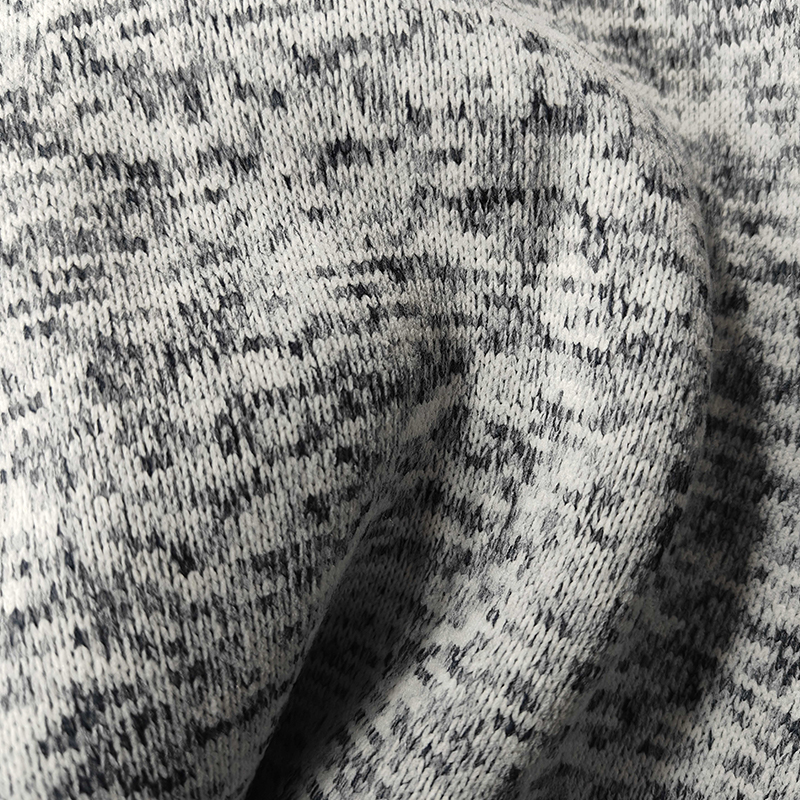
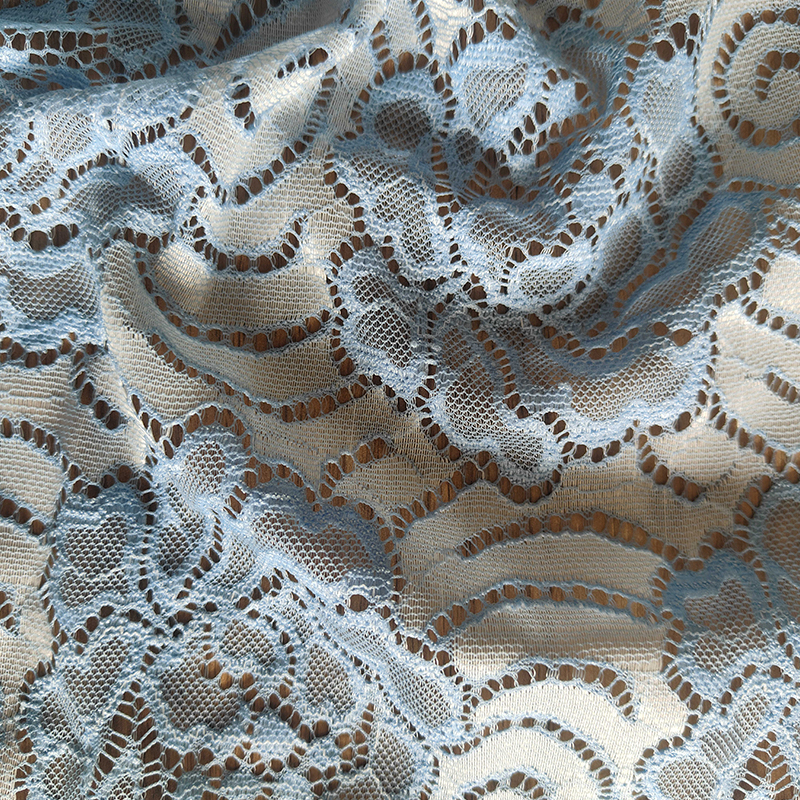

A sportswear buyer forwarded a tech pack last month that read "Tencel polyester 60/40, 180 gsm, four-way stretch" and asked a fair question: which fiber are we actually paying for? The answer moves the price, the dyeing route, the care label, and sometimes the duty code. Tencel is not polyester. Tencel is Lenzing's trademark for its lyocell and modal fibers, regenerated cellulose spun from dissolving wood pulp. Polyester is a melt-spun synthetic polymer built from petrochemical monomers. When a mill writes "Tencel polyester," it is naming a blend of two unrelated fiber families, usually 50/50 to 70/30, not one fiber wearing two labels.
The distinction matters because the two fibers fail in opposite directions. Cellulosic fibers drink moisture and lose strength when wet; polyester pushes water away and holds its shape under heat. Blending them is an engineering trade-off, and the ratio is what you are really buying.
The short answer
- Tencel means lyocell or modal, a cellulosic fiber from wood pulp; polyester means PET, a synthetic fiber.
- Any fabric sold as "Tencel polyester" is a blend, and the blend ratio decides hand feel, drying time and price.
- On retail labels, "Tencel" cannot replace the generic names lyocell or modal.
- Lyocell typically costs two to three times standard polyester staple per kilo.
Why the Two Names Get Merged in Sourcing Conversations
Three habits blur the line in everyday purchasing work. "Tencel" reads like a chemical family rather than a brand, so spec sheets file it beside polyester, nylon and spandex. Both fibers land in the same product categories, soft jersey, brushed fleece, stretch woven, so a hand-feel test tells you very little. And mills often quote a "Tencel blend" without naming the partner fiber, which lets polyester stay invisible until the lab report arrives.
Raw material
Lyocell starts as dissolving wood pulp, usually eucalyptus, from certified plantations. Polyester starts as purified terephthalic acid and monoethylene glycol, both petrochemical derivatives.
Spinning route
Lyocell dissolves pulp directly in an amine oxide solvent and recovers more than 99% of it in a closed loop. Polyester is melt-spun at roughly 280 to 290 degrees Celsius, a cheaper and far more energy-intensive-to-decarbonize route.
End of life
Lyocell is cellulosic and certified biodegradable in soil and industrial compost. Polyester does not biodegrade; recycled rPET cuts virgin feedstock but not microfiber shedding.
If you need a quick field check, burn a yarn end. Lyocell chars and smells like burning paper, leaving a soft grey ash and no bead. Polyester shrinks away from the flame, smokes black and leaves a hard black bead that will not crush. Confirm anything borderline with a solubility test in the lab before you sign off a bulk order.
Side-by-Side: How Lyocell and Polyester Actually Behave
Most arguments about these two fibers are really arguments about numbers that are already published. The table below uses typical values for standard lyocell and staple polyester; specialty variants will shift them.
Property
Lyocell (Tencel)
Polyester
What it changes
Moisture regain
11-13%
0.2-0.4%
Comfort, cling, dry time
Tenacity, dry
3.8-4.2 cN/dtex
4.5-6.5 cN/dtex
Tear strength, durability
Elongation
14-16%
25-45%
Shape retention, recovery
Heat behaviour
Chars, no melting point
Melts near 255 C
Ironing, heat setting
Wet strength
75-85% of dry
Unchanged
Wet processing, washing
Typical published ranges for standard lyocell and staple polyester; recycled, cationically dyed and high-tenacity variants will differ, so always test the actual lot.
The practical reading: polyester gives you strength, elasticity and shape memory at a low cost per kilo; lyocell gives you moisture handling, drape and a soft, slightly cool hand. A 60/40 blend of lyocell and polyester usually lands closer to lyocell in comfort while keeping enough polyester to stabilize shrinkage and improve abrasion resistance.
Moisture Regain: The Hidden Number Behind the Hand Feel
Moisture regain is the single best predictor of how a Tencel polyester fabric will feel and dry. It is also the number most often left off a spec sheet.
13%
Lyocell
12.5%
Modal
8.5%
Cotton
0.4%
Polyester
Moisture regain at 20 C and 65% relative humidity; bar heights scaled to the lyocell value.
Because lyocell holds water inside the fiber rather than on its surface, it feels cooler against skin and resists static, but it also dries more slowly. Polyester does the opposite: it transports almost no moisture, so it dries fast and feels clammy when the wearer sweats. In a knit, pushing the polyester share past roughly 50% shortens drying time noticeably, while dropping it below 30% starts to compromise dimensional stability after repeated washing.
Where Tencel-Polyester Blends Earn Their Price
Blends are not a compromise so much as a way to buy two properties at once. The chart below reflects the typical end-use split seen in blended cellulosic-synthetic knits and wovens.
- Sportswear and base layers: 30%
- Denim-style and casual wovens: 25%
- Shirting and blouse weights: 20%
- Home textiles and loungewear: 15%
- Other industrial and accessory uses: 10%
In stretch knits, the polyester component is usually what carries the elastane and holds recovery, while lyocell supplies the soft touch and moisture management that makes the garment wearable next to skin. That is why four-way stretch polyester constructions remain the workhorse base for leggings and training tops, and why mills often pair them with a cellulosic face or a cellulosic-rich next-to-skin layer.
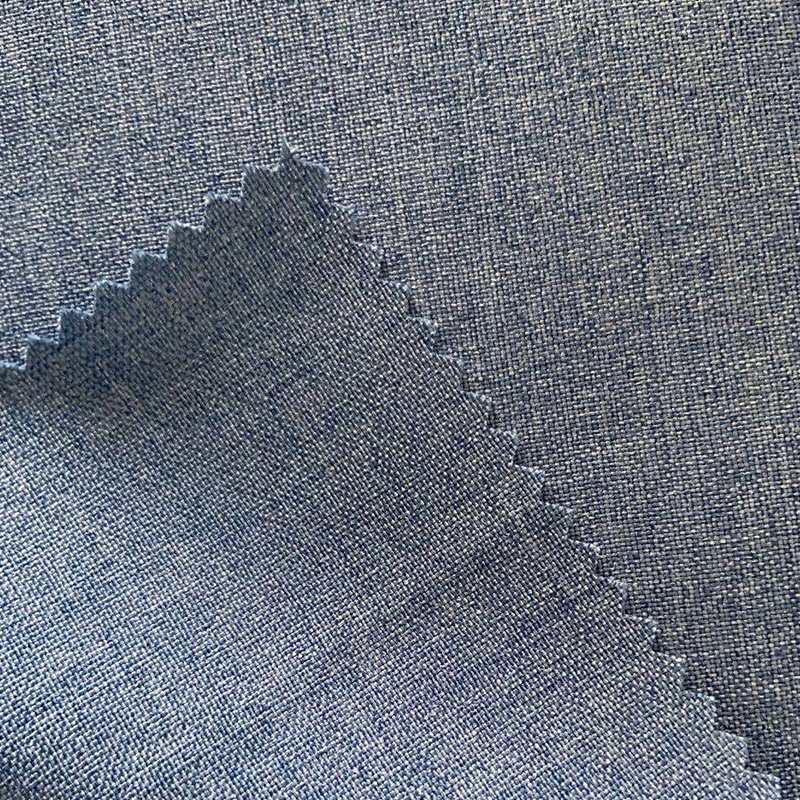 Four-Way Stretch Polyester Sport and Leisure FabricA four-way stretch polyester/spandex fabric for leggings and training tops, offering quick drying, wrinkle resistance and support for waterproof-breathable finishing.View Product →
If the finished garment also needs a membrane or a durable water-repellent finish, the fiber choice is only half the equation; the way the fabric moves vapour through the coating matters just as much, and this note on waterproof breathable sports fabrics explains the mechanical side.
A Five-Step Path From Tech Pack to Bulk Order
When a tech pack says "Tencel polyester," treat it as an unfinished specification. The following sequence has kept more than one program out of a rework cycle.
Step 1: Name the priority
Decide whether the garment is sold on comfort, durability or price. Comfort leans the ratio toward lyocell; durability and cost lean toward polyester.
Step 2: Write the ratio into the PO
Specify both generic names and percentages, for example 60% lyocell and 40% recycled polyester, plus a tolerance of two percentage points.
Step 3: Verify the cellulosic source
Ask for chain-of-custody documentation for the pulp and, where relevant, brand certification for the fiber itself.
Step 4: Test the real risks
Three washes for shrinkage, Martindale for pilling, and a fibrillation check if the fabric will be garment-dyed or heavily tumbled.
Step 5: Line up a fallback
If lyocell lead times stretch past the calendar window, a proven polyester-cotton or nylon-cotton construction can keep the launch on schedule without changing the pattern.
 Nylon/Cotton and Polyester/Cotton Outdoor Fabric SeriesA practical blend family combining synthetic durability with cotton comfort, available in multiple weights and finishes for outdoor gear, workwear and casual apparel.View Product →
Keep the approved lab dip, the bulk fabric and the counter-sample together. When a blend claim is questioned later, that trio is the only evidence that holds up.
Care Labels, Fiber Names and Compliance Traps
Labeling is where brand-name fibers cause the most avoidable trouble. In the United States, the FTC requires the generic name, so a garment must say lyocell or modal rather than Tencel alone; Tencel may appear as an additional trademark attribution. In the European Union, Regulation 1007/2011 sets the same rule, with fiber percentages listed in descending order. China's GB/T 29862 follows a similar logic. If the label lists only "Tencel polyester" as if it were one fiber, the shipment is exposed at customs and at retail audit.
- Care: wash lyocell-rich blends cool and avoid prolonged high-heat tumble drying, which accelerates shrinkage and surface fuzzing.
- Heat: polyester-rich blends tolerate higher iron temperatures but can develop permanent shine, so press through a cloth.
- Chemistry: confirm dyes and finishes against the ZDHC manufacturing restricted substances list, and keep OEKO-TEX Standard 100 certificates current for skin-contact styles.
- Recycled claims: GRS or RCS certification requires transaction certificates at every handover, not just a logo on the hangtag.
- Shedding: more buyers now request microfiber shedding data on synthetic-rich blends, so plan the test into the development timeline rather than the bulk stage.
So the answer to the original question is a clean no with a useful caveat. Tencel is a cellulosic fiber, polyester is a synthetic one, and the two are combined precisely because neither performs well enough alone in most modern knits and wovens. What deserves your attention is not the label on the tech pack but the percentage behind it, the test data attached to the lot, and whether the fiber names printed on the care label would survive a customs inspection.
Get those three right and a Tencel polyester blend becomes a predictable, repeatable fabric rather than a naming argument. Get them wrong and the cost shows up later, in reworks, chargebacks and returns that no fiber story can explain away.