English
 English
 Español
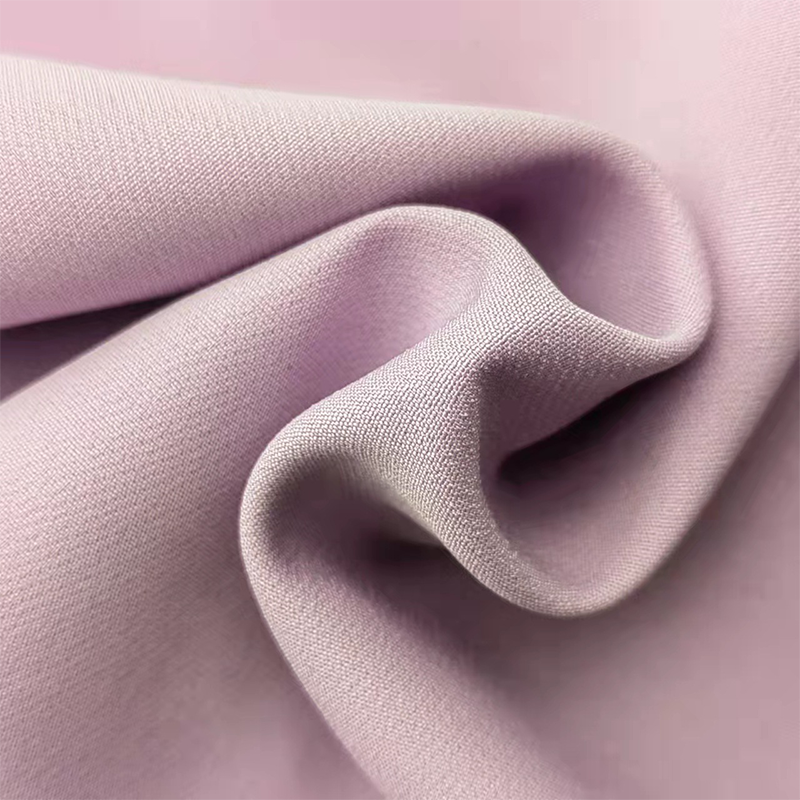

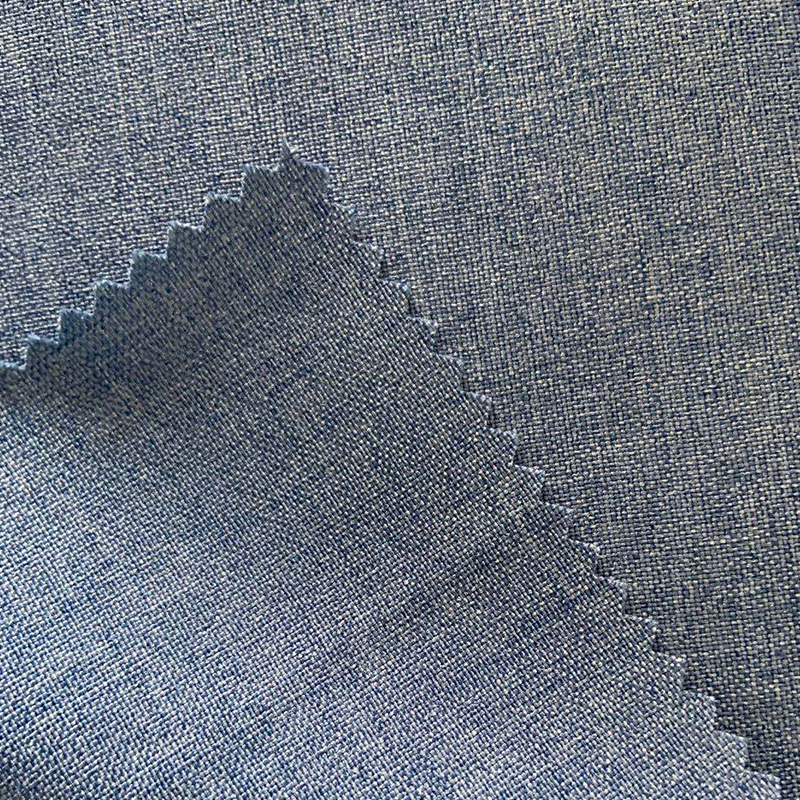
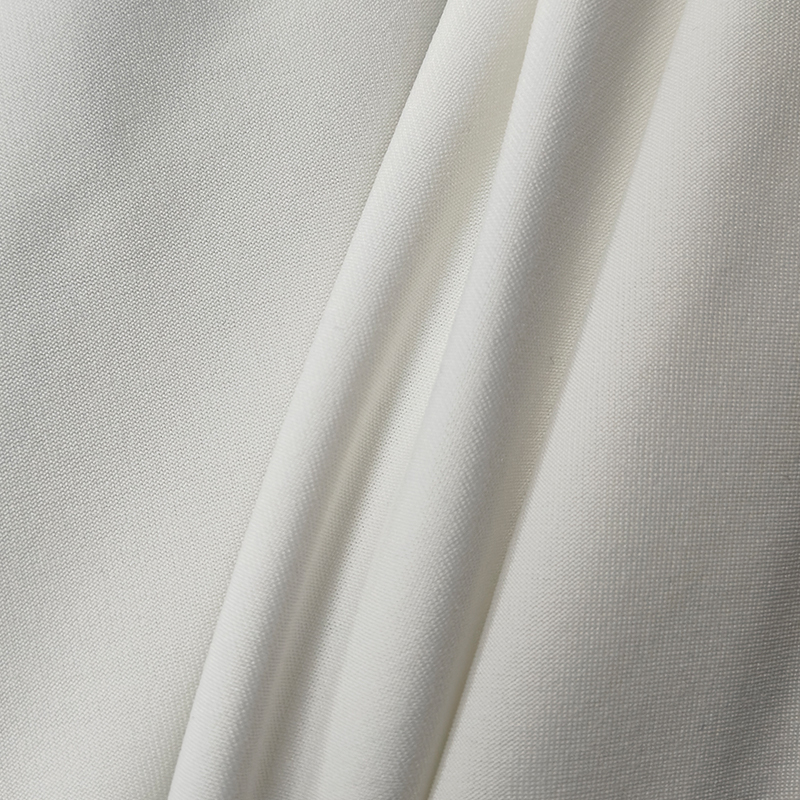
A 150 gsm polyester jersey and a 150 gsm nylon-elastane interlock look nearly identical on the cutting table. After 30 home washes at 40 °C the gap becomes measurable: an untreated jersey typically loses close to half its wicking rate, while an interlock with a properly bonded hydrophilic finish keeps most of it and still returns to within about 3% of its original width.
That is why specifying "88% polyester, 12% elastane" and stopping there hands the real performance decision to whoever runs the dyehouse that week. The materials used in high-performance sports apparel are a stack of choices — fiber, yarn profile, knit structure, dyeing route and finishing — and every layer changes what the wearer feels against the skin at kilometre eight.
The short answer
Polyester and nylon carry most of the weight in performance blends because they are strong, dry quickly and accept chemical finishing; elastane at 5–25% supplies stretch and recovery; cellulosic fibers improve hand feel; merino earns its price in odor control. None of them wick well on their own. Wicking and quick drying are finish and structure properties, so a well-finished polyester routinely outperforms a more expensive fiber that was never properly finished.
Four Layers That Decide How a Performance Fabric Behaves
Every performance fabric is a stack of decisions. Change one layer and the garment's behaviour on the body changes with it, even when the fiber content on the label stays the same.
1. Fiber selection
Polyester is the cheaper workhorse and takes hydrophilic finishes well. Nylon 6.6 feels softer, resists abrasion better and costs more. Elastane supplies stretch but softens above roughly 180 °C, which constrains drying and heat-setting.
2. Yarn and cross-section
Profiled fibers — cross, triangular, hollow or scalloped sections — increase surface area and capillary channels. A 1.2 dtex profiled polyester can move moisture noticeably faster than a round 1.5 dtex yarn at the same fabric weight.
3. Knit structure
Single jersey is light and stretchy but clings when wet. Interlock holds shape. Mesh opens ventilation zones. Piqué adds surface texture. Warp-knit tricot delivers compression with a smooth face for leggings.
4. Finishing
Hydrophilic padding, durable water repellency, antibacterial and UV treatments are applied in the stenter or during exhaust dyeing. The durability of these finishes, not their first lab figure, is what the consumer experiences.
Why two fabrics with identical fiber content behave differently
Take two 160 gsm polyester knits from the same yarn lot. A single jersey with loose loop density stretches easily but recovers slowly. A mesh with engineered open zones moves air and vapour faster but needs a denser stitch at the shoulders to avoid distortion after washing. For training tops the practical answer is usually a jersey body with mesh panels under the arms — a construction decision, not a fiber decision.
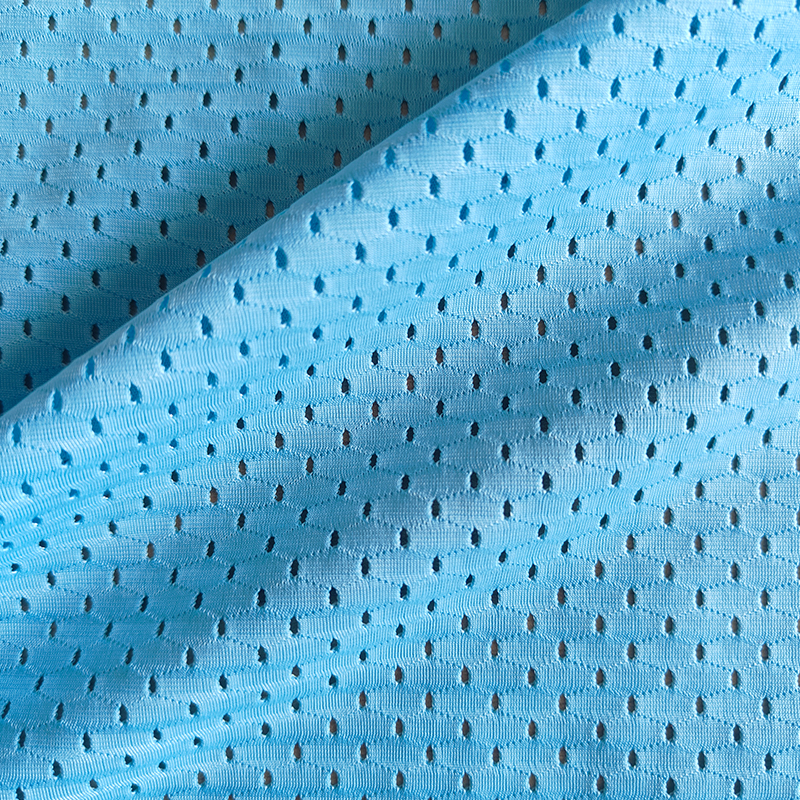
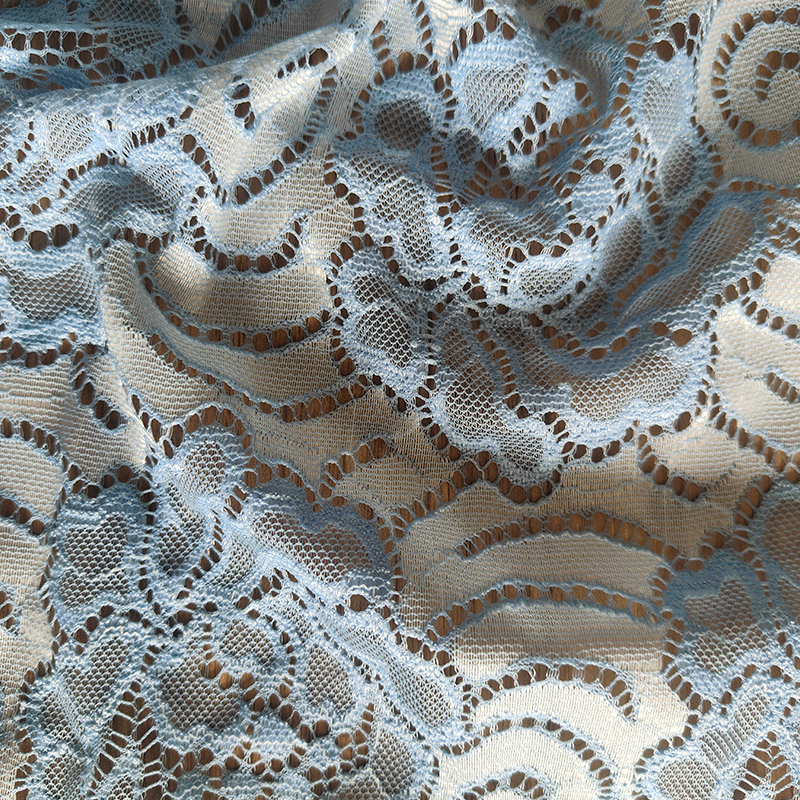 Mesh Running and Sportswear Fabric SeriesPorous mesh constructions with moderate stretch and support, useful for comparing ventilation and panel choices in training tops.View Product →
Elastane content is the second common source of confusion. Around 12% elastane in a 180 gsm interlock gives roughly 60–70% elongation and dependable recovery; the same 12% in a lightweight jersey can feel tighter simply because the loop structure has less room to move. Test recovery after repeated extension cycles rather than trusting a single datasheet value.
Comparing the Core Fibers on the Numbers Buyers Care About
Most sourcing arguments come down to a trade-off between drying speed, abrasion resistance, recovery and cost. The table below is the comparison worth putting in front of a product team.
| Fiber | Typical share in a blend | Wicking | Stretch recovery | Drying speed | Main procurement risk |
|---|---|---|---|---|---|
| Polyester (virgin or recycled) | 60–100% | Good with finish, poor without | Low on its own | Fast | Odor retention, finish wash-out |
| Nylon 6.6 | 15–40% | Good | Moderate | Medium to fast | Cost volatility, heat yellowing |
| Elastane | 5–25% | Neutral | Excellent | Slow | Heat sensitivity, chlorine damage |
| Tencel, Modal | 10–40% | Good | Low | Medium | Pilling, lower wet strength |
| Merino wool | 10–100% | Moderate | Low | Slow | Price, care requirements |
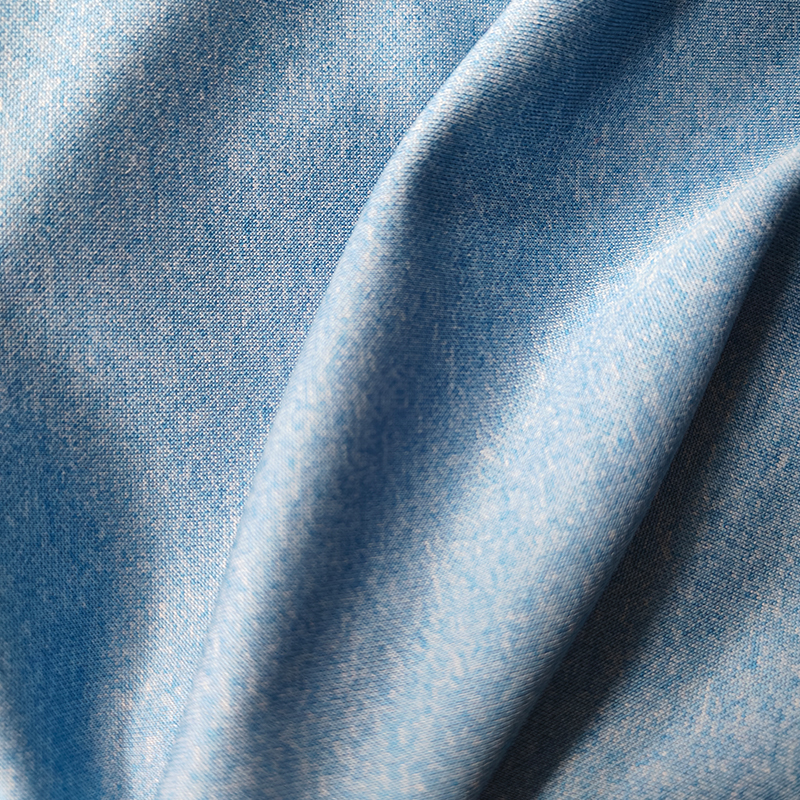
 Nylon Four-Way Stretch Sport and Leisure FabricNylon/spandex options with four-way stretch and abrasion resistance for comparing stretch, drying and durability in activewear specifications.View Product →
Blends exist to cancel weaknesses. A 90/10 polyester-elastane gives cheap stretch and fast drying for entry-level training wear. An 80/20 nylon-elastane buys abrasion resistance where leggings rub against saddles, mats and gym floors. A 65/35 polyester-Tencel softens hand feel and improves drape, at the cost of slightly slower drying and a higher pilling risk. Choosing between them is a specification exercise, not a matter of which fiber sounds more technical.
The Hidden Metric: Wicking That Survives Washing
Most suppliers quote wicking height on a freshly finished sample. That number is close to meaningless for a garment washed weekly for two seasons. The bars below show typical retention of wicking performance after 30 domestic washes at 40 °C — roughly where consumer complaints begin.
78%
Polyester, bonded finish
72%
Nylon 6.6, bonded finish
60%
Polyester-Tencel blend
55%
Merino wool
45%
Polyester, no finish
The pattern is consistent across mills: the fiber matters less than whether the finish is chemically anchored to the surface. Padding with a non-durable surfactant produces an impressive first result and a disappointing thirtieth. Ask for wash-durability curves rather than a single initial value, and ask which surfactant class was used.
Water repellency follows the same logic. A durable water repellent finish that survives 20 washes is a different product from one that survives three, and the chemistry behind it is now under regulatory pressure in Europe. The mechanism itself is worth understanding before you approve a jacket specification: how waterproof breathable sports fabrics actually work.
Where These Material Combinations Land by Category
Category splits vary by market and season, but the broad pattern in performance apparel is stable across most export programmes.
Running and gym training — 32%
Yoga and studio wear — 22%
Outdoor and hiking — 20%
Racket and team sports — 15%
Cycling — 11%
Running and training garments lean on lightweight single jersey and mesh, usually 130–170 gsm, with 10–15% elastane in the knit. Studio wear pushes toward interlock and brushed four-way stretch at 200–260 gsm, where opacity and recovery matter more than airflow. Outdoor layers favour a different logic again: a durable shell face, a fleece or grid backer and a laminating step. If your programme sits in that last group, the fabric shortlist narrows quickly — what fabrics make functional outdoor clothing perform best covers the layering logic in more detail.
A Sourcing Sequence That Avoids Expensive Surprises
Fabric problems rarely come from the fiber choice. They come from skipping a step and discovering it at bulk production. The sequence below is the one that survives contact with real timelines.
STEP 1
Define three hard performance targets — wicking rate, stretch recovery and drying time — and write them into the tech pack before any sample is requested.
STEP 2
Fix the weight and stretch direction. A 10 gsm swing changes drape and opacity on a 150 gsm jersey far more than on a 240 gsm interlock.
STEP 3
Test the strike-off after 30 washes, not before. Repeat on a second dye lot to expose finishing inconsistency across the mill's production run.
STEP 4
Agree colour tolerance and shrinkage limits in writing. A ΔE of 1.0 and 3% residual shrinkage after three washes are workable, negotiable starting points.
STEP 5
Collect compliance documents alongside the physical sample: OEKO-TEX Standard 100, recycled content certification when claimed, and a clear statement on fluorinated chemistry.
STEP 6
Retain a sealed bulk sample and a swatch from each dye lot. When a consumer complaint arrives two seasons later, the reference is what settles the conversation.
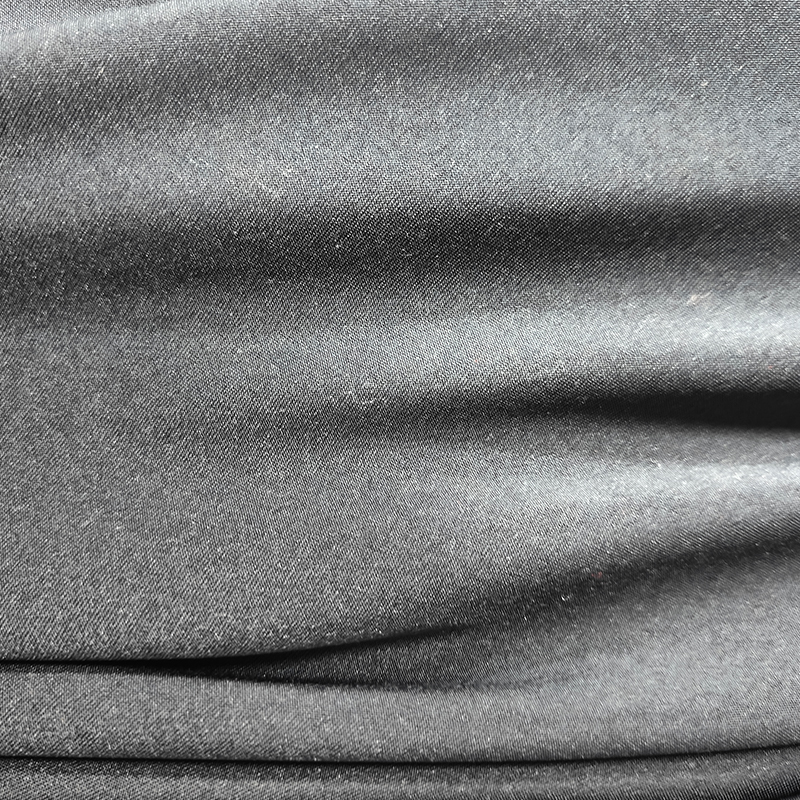
 T400 and T8 Spandex-Free Outdoor Stretch FabricsPolyester-based stretch fabrics designed to resist spandex aging, offering shape retention and a firmer hand for packs, vests and technical outerwear.View Product →
For programmes that need dimensional stability under load — packs, running vests, technical outerwear — polyester-based T400 and T8 constructions are worth a look because they combine stretch with a firmer, less clingy hand than elastane-heavy knits.
Care Labelling, Compliance and Maintenance
The best-specified fabric fails in the wash. Care labelling is part of the performance specification, not an afterthought added by the marketing team.
- Wash at 40 °C or below. Hot water accelerates elastane degradation and dulls the hand of brushed backers.
- Avoid fabric softener. Cationic softeners deposit on the fiber surface and block the hydrophilic groups that make polyester wick.
- Skip high-heat tumble drying. It sets creases, shrinks jersey and can yellow nylon at the surface.
- Keep chlorine away from elastane-containing knits; pool exposure is a common cause of fibre breakdown complaints.
- Watch fluorinated chemistry. Restrictions on PFAS in textiles have been moving through European regulators, so confirm whether your DWR is fluorine-free and whether the finish still meets the spray rating the brief requires.
- Document recycled content properly. GRS or equivalent certification must trace back through the yarn supplier, not just the fabric mill.
None of this is exotic. It is the routine work that separates a fabric that performs on the first wear from one that still performs in the second season — and that difference is what a brand's repeat purchase rate is actually built on.