English
 English
 Español


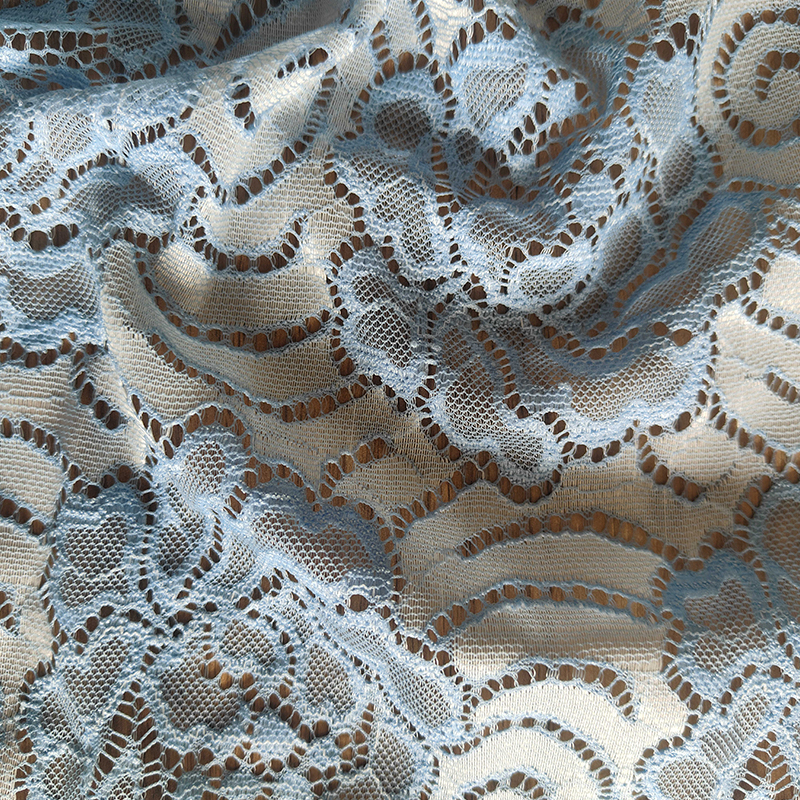
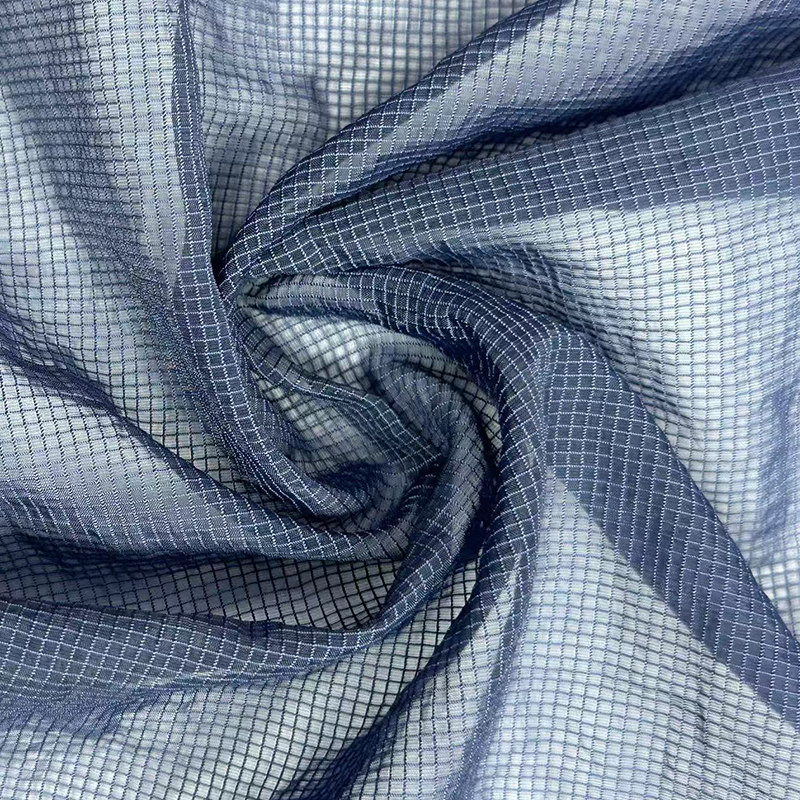
Three nylon swatches arrive on the same bench for a spring outerwear program: a 120 g/m² mesh, a 200 g/m² four-way stretch jersey and a 260 g/m² oxford. All three are nylon, all three carry a "quick dry" line in the supplier's data sheet, and all three behave completely differently. Washed together and hung in the same room, the mesh is touch-dry before the coffee goes cold, the stretch jersey follows about half an hour later, and the oxford is still cool and damp at the two-hour mark. That single test answers the question better than any fiber label can.
The short answer: yes, nylon is quick drying, but it is the second-fastest common apparel fiber rather than the fastest. Nylon's moisture regain is roughly 4.5% against polyester's 0.4% and cotton's 8.5%, so it out-dries cotton comfortably and loses to polyester by a clear margin. Fabric weight, openness and finish can shift dry time by 200-300%, which is usually more than the fiber choice itself.
Below is what the numbers actually mean, where nylon wins, where it quietly loses, and how to write a specification that holds up in a wash test instead of a brochure.
Yes, Nylon Dries Fast - Three Numbers Set the Limits
Standard moisture regain at 65% relative humidity and 21°C is about 4.5% for both nylon 6 and nylon 6,6, 0.4% for polyester, 8.5% for cotton and 11% to 13% for viscose. Regain describes how much water the polymer itself takes up, and it explains most of what you observe on a drying rack.
Nylon's amide groups hydrogen-bond with water molecules, so moisture migrates into the fiber instead of sitting only on its surface. Two consequences follow. Because less free water remains on the surface, nylon dries much faster than cotton of the same weight. But the water it does hold is bound inside the polymer, and bound water needs more energy to escape, so nylon dries noticeably slower than polyester in identical constructions.
- Nylon 6 and nylon 6,6 are effectively identical on regain. Pick between them for strength, heat setting and cost, not for dry time.
- Filament nylon dries faster than spun nylon staple, because staple yarns pack inter-fiber voids that hold water like a sponge.
- Stretch nylons carrying 15-25% elastane trap water in the gaps between yarns and typically add 30-80% to dry time.
- Nylon feels cooler and damper against skin than polyester at the same water content, a sensory gap that lab numbers never capture.
If the only requirement is the shortest possible dry time, a modified polyester or polypropylene knit still wins. Nylon earns its place when a program also needs abrasion resistance, a softer hand, deeper dye penetration and real elasticity, which is why it dominates swim, stretch training and technical shell applications rather than pure race-day kit.
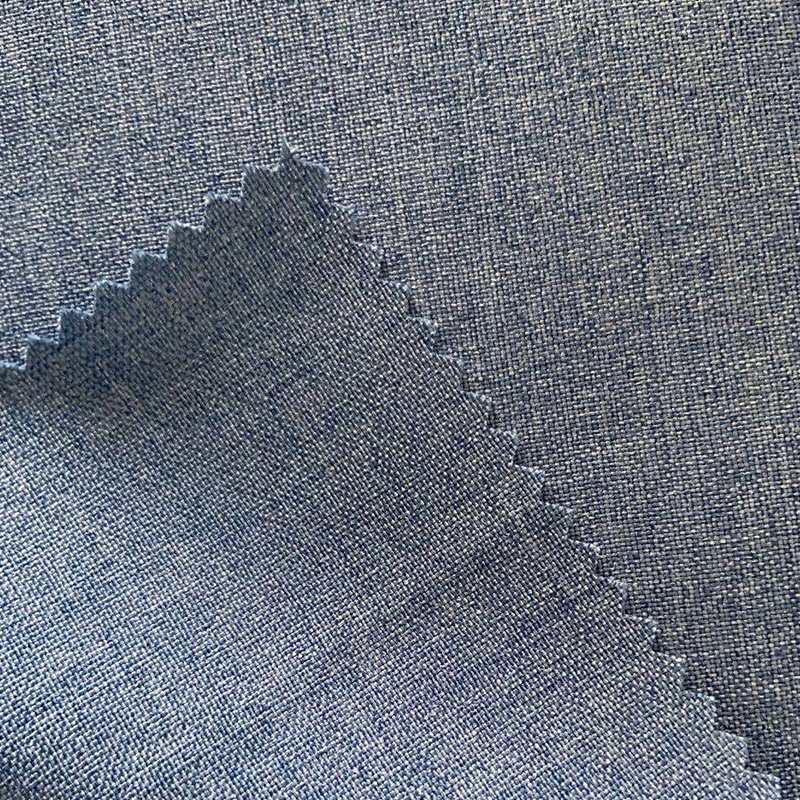 Polyester Four-Way Stretch Sports and Leisure FabricA lighter, cost-effective polyester option with four-way stretch and quick-dry positioning, relevant when comparing nylon alternatives for activewear and outdoor garments.View Product →
Four Levers That Move Dry Time More Than the Fiber Name
When a development team reports that "the nylon dries slowly", the fiber is rarely the cause. These four variables are what a buyer can actually specify and verify.
1. Areal weight
Water load scales roughly with mass. Moving from 120 to 240 g/m² doubles the water to be removed and, with it, drying time. Below about 150 g/m², almost any nylon dries acceptably.
2. Openness and thickness
Mesh, eyelet and open single jersey with high air permeability dry two to three times faster than a tight oxford or interlock at identical weight. Airflow through the structure matters more than airflow across it.
3. Yarn architecture
Fine denier filaments, profiled cross-sections and textured yarns build capillary channels that pull water to the surface where it can evaporate. A 40D profiled filament moves moisture very differently from a 150D round filament.
4. Finishes
Hydrophilic wicking finishes speed transport. Silicone softeners and residual coning oils can block it until the first wash. A DWR sheds surface droplets but does nothing for moisture already inside the fiber.
Our own outdoor fabric range is organised around exactly these levers, because a shell fabric and a pack lining rarely need the same balance of weight, stretch and airflow.
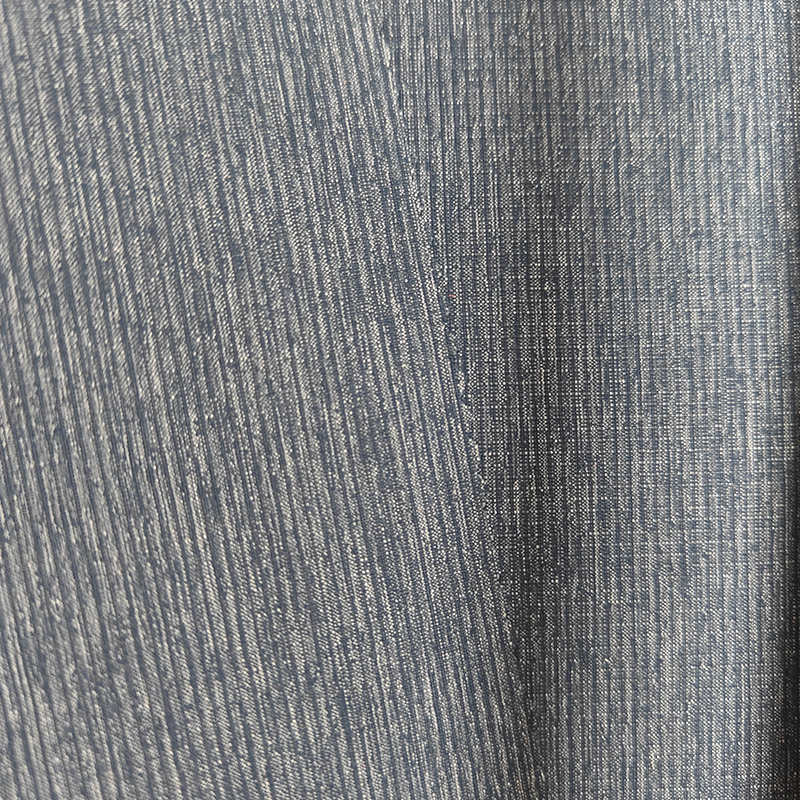 Four-Way Stretch Nylon Outdoor Fabric RangeA nylon-focused outdoor fabric series with four-way stretch, breathability and moisture-wicking properties, suited to shells, hiking pants and pack applications where weight and construction vary.View Product →
Drying Benchmarks: Nylon Against the Usual Suspects
The comparison only means something when weight and construction are held roughly constant. The figures below come from hang-drying comparable knits in still air after a standard soak and spin.
Indicative drying times for comparable knit constructions, hung in still air at 21°C and 65% relative humidity after a 30-minute soak and one-minute spin; treat them as comparison ranges, not as acceptance limits on a purchase order.
Hidden Variables: What the Spec Sheet Leaves Out
Indexing every sample against a polyester jersey set at 100 makes the spread obvious. The same fiber, the same 4.5% regain, and a 2.4x difference in dry time across one product family.
100
Polyester
120
Nylon mesh
160
Nylon jersey
210
Nylon plus 20% elastane
280
Nylon oxford
340
Cotton jersey
Relative dry time index, polyester jersey equals 100. Higher bars mean slower drying.
Three effects explain most of that spread, and none of them appear in a standard datasheet. Elastane is the first: it is hydrophobic but structurally traps water between yarns, so a stretch version of the same nylon can dry 30% to 80% slower than its rigid twin. Residual chemistry is the second: coning oils, silicone softeners and some anti-pilling treatments are hydrophobic and will suppress wicking until the garment has been washed two or three times, which is why lab results on greige samples mislead buyers. Heat history is the third: excessive heat setting can compact the surface and close capillary channels, and a fabric that wicked well in the greige state may underperform after finishing.
The practical rule is simple. Ask for drying data on the finished, washed fabric, never on greige, and ask for the construction alongside it. A quick-dry claim without a weight and a yarn count is not a specification.
Where Quick-Dry Nylon Earns Its Place
Nylon is chosen for fast drying less often for pure speed than for what it does while wet. It keeps strength when soaked, resists abrasion at contact points and holds stretch recovery, which is why the demand concentrates where garments get wet repeatedly rather than once.
- 34% training and activewear, where sweat volume matters more than dry speed
- 24% outdoor shells, linings and packable styles
- 18% swim and water sports
- 14% bags, packs and footwear linings
- 10% workwear and uniforms
Share of quick-dry nylon demand by end use, based on our order mix across sports, outdoor and bag programs.
Mesh remains the workhorse for ventilated panels, while four-way stretch nylons cover the panels that must move. If you are still mapping fabric families to garment functions, this overview of fabrics for functional outdoor clothing sets out the trade-offs between weather protection, breathability and dry speed.
 Mesh Fabrics for Running and Sports Leisure WearA porous mesh series with breathability, moisture wicking and moderate stretch, useful for ventilated panels where sweat dissipation and lightweight movement matter.View Product →
Specifying Quick-Dry Nylon in Five Steps
Step 1 - Fix the end use
Decide whether the fabric must dry fast after sweat, after immersion or during storage. Each case implies a different target and a different test.
Step 2 - Set weight and structure
Write grams per square metre and the knit or weave explicitly. A tolerance of plus or minus 5% avoids arguments at inspection.
Step 3 - Define the finish
State whether a hydrophilic wicking finish is required, whether a DWR is present, and whether both must survive 20 home launderings.
Step 4 - Agree the test method
AATCC 199 for drying rate, AATCC 195 for moisture management and AATCC 79 for absorbency give a defensible, repeatable package.
Step 5 - Test the finished, washed fabric
Approve on bulk fabric after three washes, not on a lab dip. This single change removes most quick-dry disputes before they reach the cutting room.
Care, Testing and Compliance Notes
- Never use fabric softener on wicking nylon. Cationic softener films block capillary channels and can permanently reduce dry speed.
- Tumble dry low or line dry. High heat relaxes and can yellow nylon, and it may also alter the hand of the wicking finish.
- Specify a wash-fastness and a dimensional stability requirement alongside the drying claim, since the three interact after repeated laundering.
- For export programs, confirm OEKO-TEX STANDARD 100 or the brand's restricted substance list early, and confirm the DWR chemistry against tightening PFAS restrictions in the EU and several US states.
- Keep retained samples of approved bulk for each dye lot. Nylon dyeing and heat setting can shift drying behaviour enough to be noticeable on a hang test.
Internal laboratory testing before shipment, ideally on every bulk lot rather than on the first, is the cheapest insurance available. A wicking finish that fails after ten washes will cost far more in returns than the test itself.
So is nylon quick drying? Yes, reliably so against cotton, and predictably less so than polyester at the same weight. Within nylon itself, the spread between a 120 g/m² mesh and a 260 g/m² oxford is wide enough to decide whether a garment works in the field or ends up in a laundry bag. Fiber chemistry sets the floor and the ceiling; weight, structure and finish decide where in that range your fabric lands.
The next time a data sheet promises "quick dry", ask three questions: what is the finished weight, what is the yarn and elastane content, and which test method was run on washed fabric. The answers tell you more than the fiber name ever will, and they turn a marketing claim into something a production team can actually hold a supplier to.