English
 English
 Español

A luggage brand recently asked us to compare seam-tear performance for the same 210D backpack construction in nylon and polyester. The ASTM D5034 grab test showed the nylon sample breaking at roughly 42% higher load. That result aligns with more than a decade of similar observations in our textile testing lab.
The direct answer to the headline question is yes: nylon is stronger than polyester in tensile strength, tear resistance, and abrasion resistance when both are compared at the same denier and weave construction. The more useful question for a fabric buyer is how much strength your application actually needs. Polyester offers better UV stability, lower moisture pickup, a lower price, and faster drying. Strength should never be evaluated in isolation.
Core conclusion: nylon delivers roughly 25-50% higher breaking tenacity and two to three times longer abrasion life than polyester in an equivalent fabric construction. Polyester, however, retains 70-90% of its initial strength after prolonged UV exposure, while unstabilized nylon can fall below 50%. Match the material to the loading mode and exposure environment, not to polymer marketing.
Why nylon is intrinsically stronger at the polymer level
Hydrogen bonding across polymer chains
Nylon (polyamide 6 or 66) has amide groups spaced along the backbone, forming dense hydrogen bonds between adjacent chains. When a load is applied, those bonds distribute stress across many molecular segments instead of letting one chain take the load. Polyester (PET) uses ester groups and rigid aromatic rings, which give stiffness and dimensional stability but not an equivalent hydrogen-bonding network.
Elastic recovery and energy absorption
Nylon typically elongates 20-40% before breaking; polyester elongates 15-30%. The extra stretch is not weakness. It lets nylon absorb impact energy from drops, snags, and repeated stress without reaching its breaking point. This is why slings, webbing, and strap loops are overwhelmingly nylon.
Abrasion resistance comes from recovery
Under repeated rubbing, nylon fibres deflect and return to shape instead of fibrillating. Martindale and Taber runs in our lab repeatedly show nylon fabrics surviving two to three times more cycles than polyester equivalents before first yarn break. At the same denier, standard nylon tenacity is roughly 4.5-6.5 g/den versus 3.5-5.0 g/den for polyester.
The polymer-level gap carries into finished goods. For a deeper look at how fibre choice interacts with weave and finish, read what makes functional outdoor clothing fabrics perform best. In stretch garments, the difference shows up clearly in nylon four-way stretch outdoor fabric, which typically tests 20-30% higher in tear strength than an equivalent polyester stretch type.
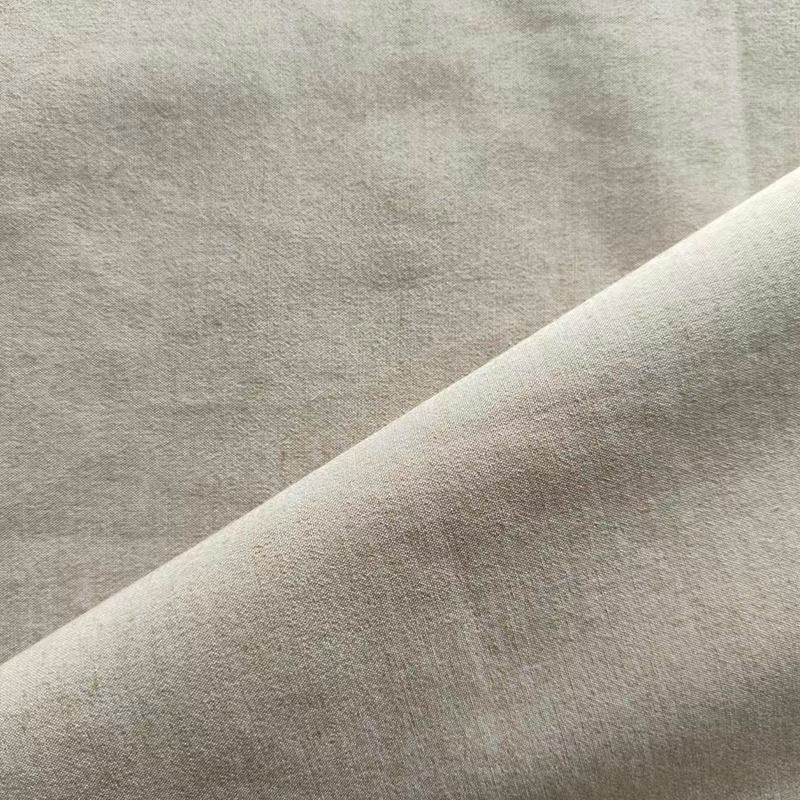
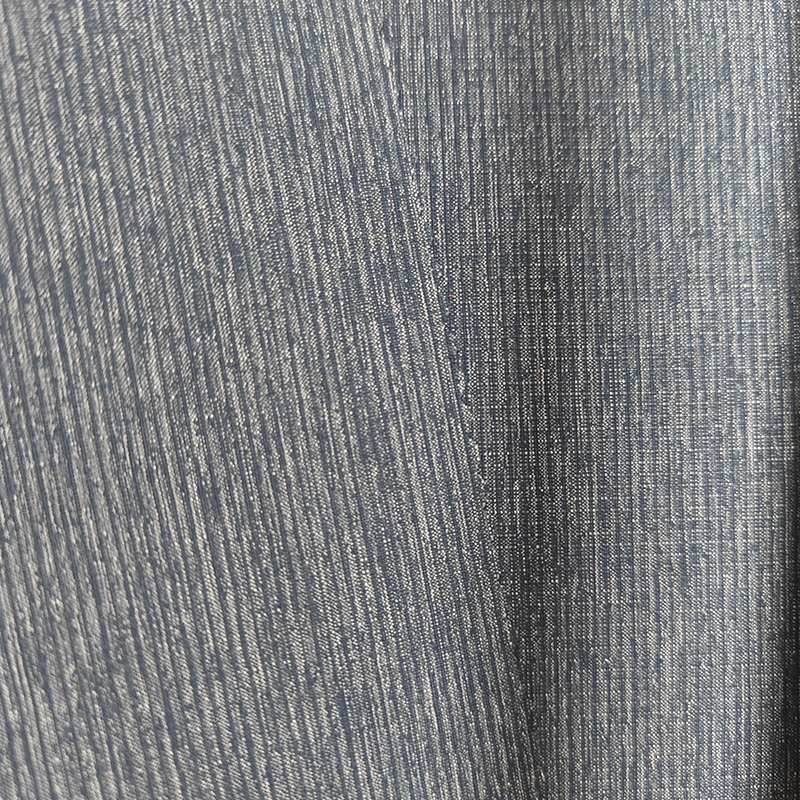 Nylon fabric, four-way stretch outdoor fabrics Suppliers, Custom Company - WUJIALANNERET TEXTILE is Custom Nylon fabric, four-way stretch outdoor fabrics Suppliers and Company in China, OEM/ODM Nylon fabric, four-way ...View Product →
Nylon vs. polyester: strength data at a glance
Typical ranges for standard textile-grade yarns at identical construction. Final values depend on denier, weave density, and finishing, so verify performance on the finished fabric.
Initial strength data tells you what the fabric can do when it leaves the factory. End users experience retained strength. Accelerated UV exposure (ASTM G154, 600 hours) changes the ranking in a way that surprises many buyers:
Nylon
0 h
0 h
5.8 g/den
Nylon
600 h
600 h
2.6 g/den
Polyester
0 h
0 h
4.2 g/den
Polyester
600 h
600 h
3.4 g/den
The chart explains why a polyester shell can feel lighter in your hand yet outlast nylon in Florida sunshine or on a car rooftop. If the product will spend its life outdoors, request UV-stabilized nylon with UV absorbers, or accept polyester for outer shells.
Wetting adds a second layer. Nylon loses about 10-15% of its strength when saturated; polyester loses about 5%. In marine products or rain covers, this narrows the gap. Aggressive laundering pushes the decision further: peroxide-based industrial washing accelerates hydrolysis in nylon more than in polyester. For workwear cleaned on a weekly cycle, a polyester four-way stretch sports and leisure fabric can keep dimensional stability and strength longer than a nylon counterpart in the same wash schedule.
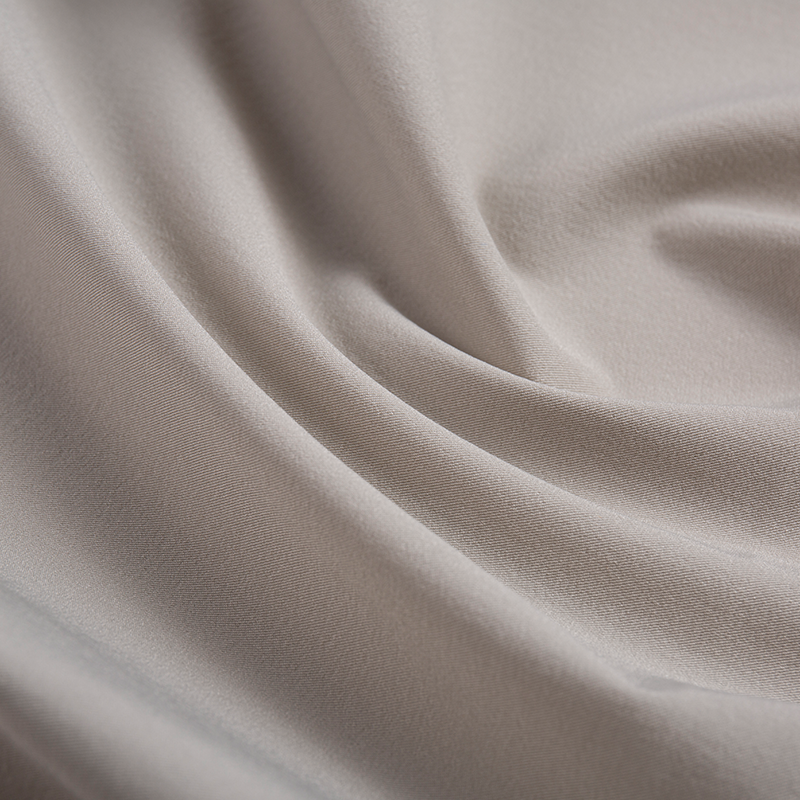
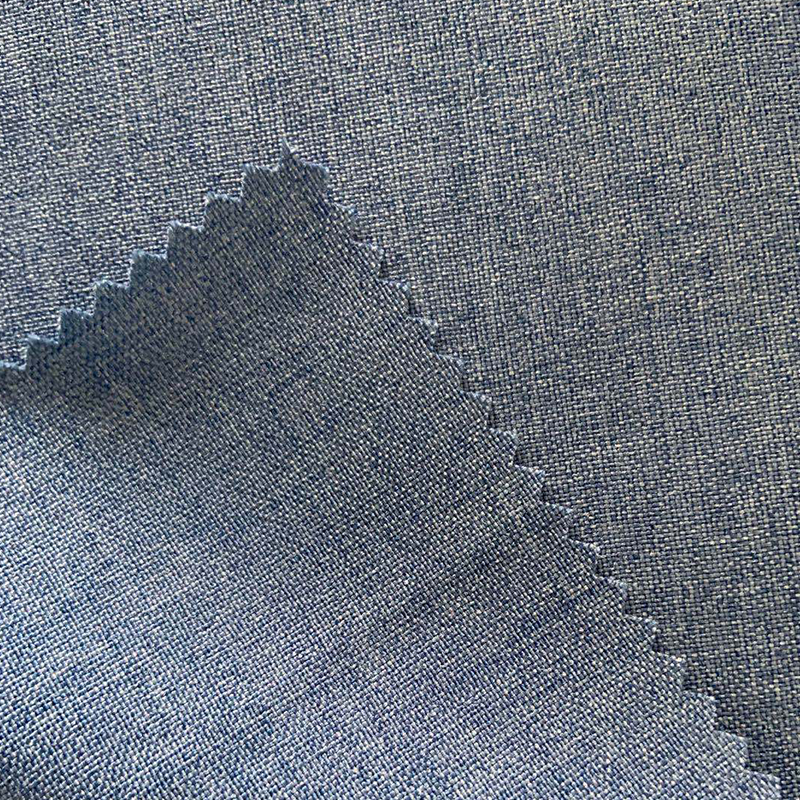 Polyester fabric, four-way stretch sports/leisure fabrics Suppliers, Custom CompLANNERET TEXTILE is Custom Polyester fabric, four-way stretch sports/leisure fabrics Suppliers and Company in China, OEM/ODM Polyester fa...View Product →
Where strength-first design still picks nylon
Looking at order volumes that specify strength as the primary selection criterion, nylon remains the dominant polymer in the following application segments:
Outdoor gear and equipment 35%
Bags and luggage 25%
Webbing, straps, industrial 20%
Sportswear and stretch apparel 15%
Other 5%
This split reflects a common purchasing pattern among functional textile buyers. Outdoor backpacks get high-tenacity nylon for the body and webbing; luggage frames use nylon for load-bearing panels and polyester for liners; sportswear adopts nylon for mechanical stretch and polyester for moisture management. In many products both polymers appear in different components. In bags and packaging, the base cloth is often the structural layer, and many pack makers choose oxford cloth for bag and packaging fabrics in nylon for anchor panels and polyester for main compartments to balance strength and cost.
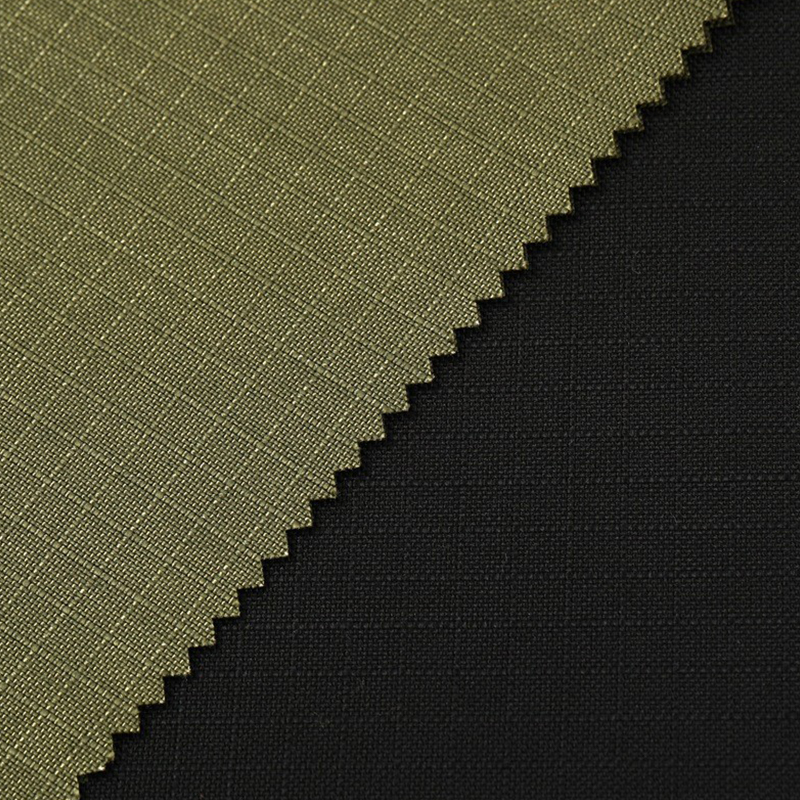 Oxford cloth bag/packaging fabrics Suppliers, Custom Company - WUJIANG LANNERET LANNERET TEXTILE is Custom Oxford cloth bag/packaging fabrics Suppliers and Company in China, OEM/ODM Oxford cloth bag/packaging fabrics ...View Product →
A four-step rule for choosing between nylon and polyester
1
Define the failure mode
Is the dominant risk abrasion, tearing, stretching, or UV bleaching? If abrasion and tearing, nylon wins. If UV and long outdoor life, polyester is the lower-risk starting point.
2
Fix the construction first
Compare the same denier, weave density, and coating weight. A 420D nylon with PU coating is a different product from 210D polyester ripstop. Polymer name alone will not settle the spec.
3
Test the finished fabric
Run ASTM D5034 grab tensile, ASTM D2261 tongue tear, and Martindale to 20,000 cycles. Ask for batch test reports rather than relying on polymer datasheets.
4
Audit the full lifecycle
Calculate retained strength at 12-24 months: sunshine hours, wash cycles, and chemical exposure matter more than the initial spec sheet. If the end user is outdoors daily, polyester may outperform nylon.
Maintenance and compliance points to write into your spec
- Heat and ironing: nylon melts near 220°C (PA6) to 255°C (PA66); PET melts around 250-260°C. Specify synthetic/low-heat ironing and avoid hot tumble cycles for nylon garments.
- Bleach and laundry chemistry: chlorine bleach attacks nylon bonds. Polyester tolerates peroxide-based bleach better. In workwear, match the cleaning chemistry to the polymer to avoid premature strength loss.
- UV stabilization: for outdoor nylon, add UV absorbers or specify PU/acrylic coatings. Do not assume a generic nylon data sheet includes UV retention; ask for it explicitly.
- Compliance documentation: for EU and US end markets, confirm REACH SVHC, OEKO-TEX Standard 100, and applicable flammability tests (ASTM D6413 or CPSC fixtures). Request from-yarn-to-fabric traceability and batch test records.
The answer to whether nylon is stronger than polyester remains yes for tensile, tear, and abrasion loads. But strength is a system property involving the yarn, the weave, the coating, and the sunlight in your customer's city. When you evaluate options with a qualified textile manufacturer, bring the failure mode, the end-use environment, and the washing or exposure cycle. A good supplier will help you select the polymer and construction that survive those conditions, not just the strongest number on a test report.